

why consolidated travel platform outperform fragmented booking methods

Why Consolidated Travel Platforms Outperform Fragmented Booking Methods

Most companies realise they spend far more on travel than they should, yet few can pinpoint where the extra cost slips through. It often begins with something that seems harmless: different teams booking through different channels. One employee books on a public site, another uses an agent, a third books directly on an airline app. Each channel works on its own, but together they create a maze of pricing, invoices, taxes and policies that becomes almost impossible to manage.

This is where consolidated travel platforms have begun to change the landscape. They offer a single system to search, book, approve, track and analyse every trip. The difference may seem subtle at first, but the operational impact is significant. Finance teams gain clarity they rarely get from fragmented booking, while travel managers finally have a system that keeps bookings organised and transparent.

This guide walks through why consolidated travel platforms consistently outperform scattered methods, how companies benefit, and what to look for when evaluating a modern solution.

The Hidden Costs of Fragmented Travel Booking

When travel happens across different channels, costs rise in ways that are difficult to track. The problem is not only the price of the ticket itself. The real issue lies in how much time and effort is required to manage the process from start to finish.

1. No Standardisation of Fares or Fees

Public fares change constantly, and every booking channel displays rates differently. Some add convenience fees. Others have limited refund options. When teams book independently:

  • The company pays inconsistent fares for the same routes
  • Hidden charges add up without visibility
  • Employees often choose convenience over policy

This inconsistency becomes more visible when travel volumes increase.

2. Scattered Invoices and Missing GST Support

Fragmented booking creates a flood of email receipts, partial invoices and unsupported GST documents. Finance teams must:

  • Chase individual employees for invoices
  • Manually reconcile GST for every sector
  • Manage corrections when details are missing

This increases the risk of compliance gaps, inaccurate claims and avoidable tax loss.

3. Limited Oversight for Approvals

Without a unified platform:

  • Managers approve trips through WhatsApp or email
  • Finance cannot see the complete history of a trip
  • Policy enforcement depends on individuals, not systems

The result is a patchwork of approvals with no audit-ready trail.

4. Inability to Analyse Travel Spend

If bookings happen everywhere, data lives nowhere. Companies cannot answer basic questions such as:

  • Which department spends the most on travel
  • Which routes offer opportunities for savings
  • How many cancellations occur each quarter

Without a clear picture, cost optimisation becomes guesswork.

5. High Operational Load on Support Teams

Handling travel changes, reissues and cancellations across different channels stretches HR and finance teams. Each interaction takes time because:

  • Policy rules differ across channels
  • Processes vary for refunds
  • Ticket corrections require separate support teams

The burden grows as the number of trips increases.

How Consolidated Travel Platforms Solve These Problems

A consolidated travel platform offers a unified system that manages the entire journey. It handles flights, hotels, cabs, trains, approvals, policies and payments in one place. For growing organisations, this structure creates a strong foundation.

how consolidated travel platform solve these problems

1. Centralised Search, Book and Approval

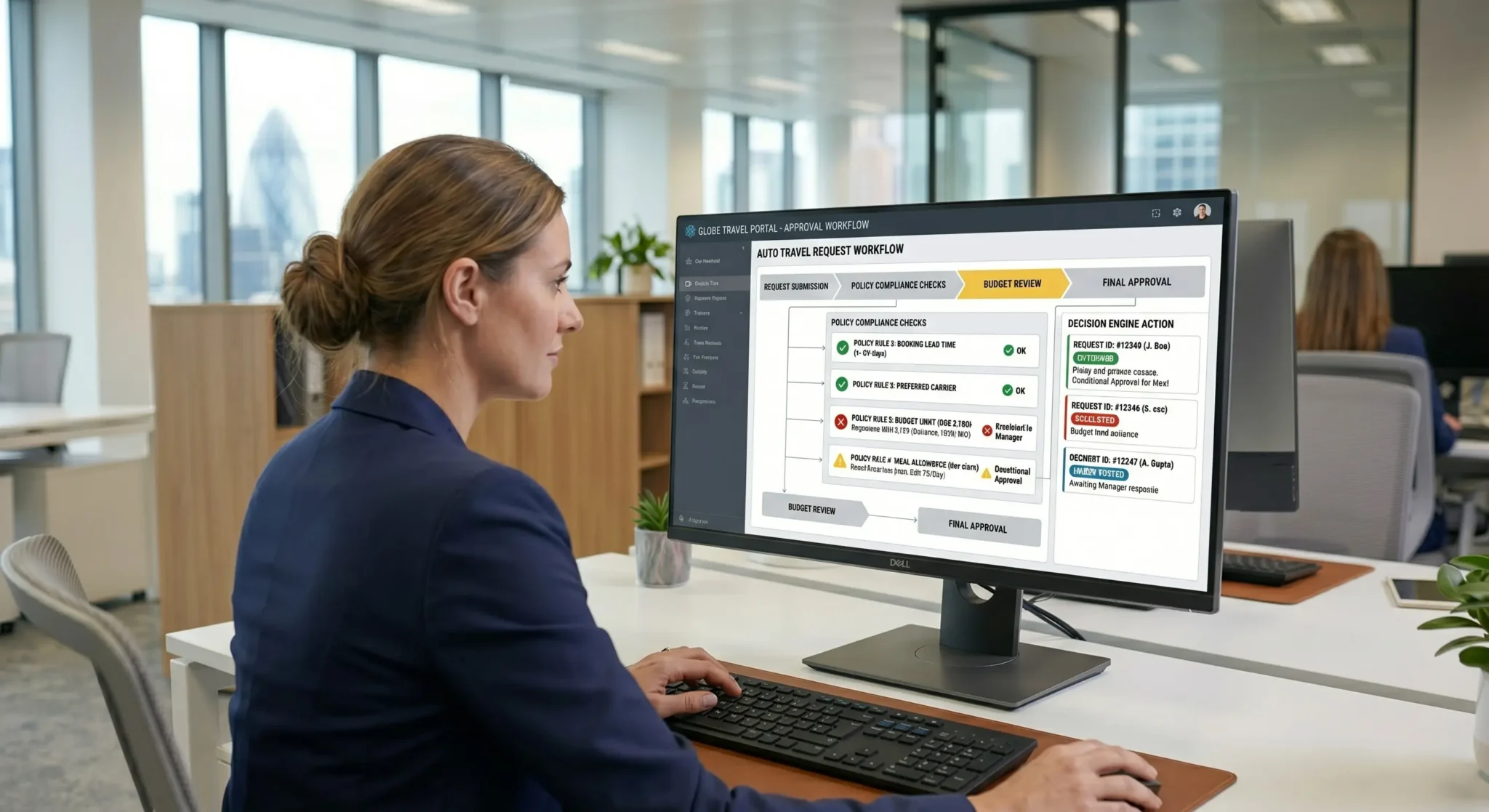
A unified interface brings complete visibility. Employees can:

  • Search fares across airlines and providers
  • Follow pre-set policy rules automatically
  • Trigger approval workflows within the platform

Managers approve quickly, and the audit trail remains intact for compliance checks.

2. Uniform Invoices and GST-Ready Documentation

Consolidated platforms generate:

  • Consistent GST invoices
  • Clear tax breakups
  • Automatic linkage of credit notes and refunds
  • Document storage for every booking

Finance teams no longer chase receipts or correct invoice errors.

3. Real-Time Travel Spend Visibility

Most unified systems include dashboards that show:

  • Department-level spending
  • Route-wise price patterns
  • Cancellation trends
  • Project or cost-centre allocations

This helps leadership identify patterns and take informed decisions.

4. Stronger Cost Control

With consistent pricing and visible options, companies:

  • Avoid inflated fares on public channels
  • Reduce last-minute bookings
  • Capture negotiated corporate fares
  • Implement fare caps without manual checks

Over time, these changes reduce overall travel spend significantly.

5. Faster Support for Changes and Refunds

When bookings stay within one platform:

  • Reissues follow a predictable process
  • Refunds update automatically
  • Credit notes are mapped without manual effort

This saves time for both employees and the support team.

Why Unified Travel Systems Perform Better Operationally

Beyond cost savings, consolidated systems offer operational advantages that fragmented methods cannot match.

Cleaner Policy Enforcement

Policies live inside the system rather than in PDF documents. This means:

  • Out-of-policy bookings are flagged instantly
  • Approvals flow through predefined paths
  • Employees cannot bypass rules by choosing their own channels

This reduces friction between teams and protects the company from unexpected costs.

Improved Duty-of-Care

Knowing where employees are at any time helps with safety obligations. A unified platform provides:

  • Real-time booking locations
  • Travel history
  • Alerts in case of disruptions

Fragmented booking cannot provide this visibility.

Better Experience for Travellers

Employees prefer systems that:

  • Show fares clearly
  • Allow easy changes
  • Offer consistent support

A unified platform reduces the frustration of dealing with multiple vendors and inconsistent customer service.

Stronger Audit and Compliance Readiness

Consolidated systems maintain:

  • Complete booking logs
  • Approval histories
  • Tax records
  • Vendor details

This simplifies internal audits, external reviews and statutory compliance.

When Companies Should Move Away From Fragmented Methods

Most organisations reach a point where their current approach no longer works. The right time to upgrade often becomes clear through signs like:

  • Frequent invoice disputes
  • Rising travel costs despite no increase in volume
  • Slow reimbursement cycles
  • Difficulty tracking department-wise spending
  • Employees booking outside policy

If any of these sound familiar, centralising travel is no longer optional.

when companies should move away from fragmented method

What to Look for in a Modern Consolidated Travel Platform

Not all platforms are the same. Look for one that combines usability with strong financial controls.

Features to Prioritise

  • Multi-channel inventory for flights, hotels, trains and cabs
  • Smart approval workflows
  • Built-in policy controls
  • GST-compliant invoices
  • Automated reconciliation
  • Spend dashboards
  • Easy modification and cancellation
  • Secure data management

A strong platform also offers flexibility to accommodate company-specific rules.

Scalability Matters

Choose a tool that supports growth. As booking volumes expand, the system should handle:

  • Multiple GSTINs
  • Regional offices
  • Cost-centre structures
  • Multi-level approvals

The system should grow with the company rather than restrict it.

Reliable Support

Since travel is time-sensitive, dependable help is valuable. Look for:

  • Quick response times
  • Knowledgeable teams
  • Assistance for reissues and refunds

Good support protects employees from travel-related stress.

FAQs

Why do companies lose money with fragmented booking?

Costs rise due to inconsistent fares, poor visibility, missing invoices, and weak policy controls. Without a unified system, companies cannot monitor patterns or prevent unnecessary expenses.

Does a consolidated travel platform reduce GST errors?

Yes. It provides consistent invoices, removes manual receipt collection and helps finance teams match tax data accurately.

Do employees find it restrictive?

Most employees prefer unified systems because they offer faster searches, clearer fares and simpler change management.

Can small companies benefit from centralised travel?

Even small organisations gain better control and visibility. As they grow, the platform prevents operational challenges.

How soon can companies see results?

Most teams report improvement in spend visibility and policy compliance within the first quarter of adoption.

Conclusion

If your organisation still relies on scattered booking channels, this is the moment to move toward a simpler, more controlled travel ecosystem. A unified platform gives finance teams clarity, travel managers order and employees a smoother booking experience. Companies that centralise their travel processes see immediate improvements in compliance and long-term reductions in cost.

To learn how a modern consolidated travel system can support your organisation, book a short demo and explore how your entire travel workflow can become more efficient and easier to manage.

practical guide to planning corporate events and mice travel without overspending

A Practical Guide to Planning Corporate Events and MICE Travel Without Overspending

Planning corporate events has never been more important for organisations that want to strengthen culture, encourage collaboration, or showcase business achievements. Meetings, Incentives, Conferences, and Exhibitions (MICE) have become a core part of modern business strategy. Yet, as travel and hospitality costs climb each year, many finance and administration teams face a familiar challenge: how to host meaningful events without stretching the budget.

Most companies do not overspend because they lack discipline. They overspend because planning is fragmented across departments, information sits in silos, and small decisions pile up into large, unplanned expenses. With a clear framework and the right coordination tools, corporate events can be both memorable and financially controlled.

This guide walks through a detailed, practical structure for planning MICE travel and events in a way that balances experience with cost efficiency. Whether your organisation is arranging a major annual conference or a regional training workshop, these steps will help you build a more predictable programme.

Understanding the Landscape of MICE Travel

MICE travel today involves far more than securing a venue and booking flights. Teams must consider traveller preferences, vendor partnerships, compliance requirements, sustainability goals, and the financial impact of last-minute changes. A practical plan must account for these layers from the start.

understanding landscape of mice travel

Why MICE Activities Matter

Corporate events influence several areas of business performance:

  • Stronger relationships with clients and partners
  • Higher employee motivation and retention
  • Better knowledge sharing and cross-team alignment
  • Improved brand presence in local or global markets

When executed well, events help teams build trust faster than they can over virtual calls. For companies with large field forces or distributed offices, these gatherings often serve as a vital anchor for culture.

Why Costs Escalate Easily

Even skilled teams encounter cost overruns. Common reasons include:

  • Unclear approval processes
  • Multiple vendors negotiating separately
  • Late bookings and unplanned route changes
  • Poor visibility into negotiated rates
  • Fragmented communication between travel and events teams

These issues are manageable once planning follows a structured, transparent process.

Step 1: Begin With a Clear Objective and Budget Range

Every successful corporate event starts with clarity. Before comparing venues or selecting travel dates, define the event’s purpose in simple terms.

Set the Right Foundation

Ask:

  • What outcome should the event achieve?
  • Who must attend and why?
  • What activities are essential and what can be optional?

Once the objective is fixed, determine a realistic budget range rather than a rigid number. This helps teams remain flexible during negotiations without losing control.

Build a Preliminary Budget Outline

Create a list covering:

  • Venue rental
  • Travel bookings
  • Accommodation
  • Food and beverage
  • Event materials and technology
  • Ground transport
  • On-site staffing

This outline becomes a starting point for deeper planning.

Step 2: Choose Locations With Built-In Advantages

Where you host an event directly influences cost, engagement, and convenience. The ideal location balances accessibility and comfort without exceeding budget expectations.

Look for Natural Cost Savers

Select cities or regions that offer:

  • Multiple flight options
  • Competitive hotel pricing during your event dates
  • Good ground transportation networks


  • Availability of business-friendly venues

Avoid locations with major holidays, trade shows, or peak tourist seasons, as these often create price surges.

Assess Venue Value, Not Just Price

Hotels and convention centres often offer bundled packages that reduce overall spend. Compare:

  • Meeting room capacity
  • Audio-visual setup
  • Catering options
  • Flexibility in booking amendments
  • Complimentary inclusions for large groups

A well-structured package can often be more cost-effective than piecing services together from multiple vendors.

Step 3: Consolidate Bookings for Better Control and Pricing

One of the most effective ways to reduce MICE travel expenditure is through centralised booking. When all travel and accommodation passes through a single system, patterns become visible and savings become easier to capture.

The Value of Central Coordination

A unified system allows:

  • Real-time tracking of bookings
  • Faster approvals
  • Stronger rate negotiations
  • Better compliance
  • Reduced leakage from out-of-policy bookings

Teams also gain consistent communication and fewer errors caused by manual entry.

Automated Support Helps More Than You Expect

Modern platforms use intelligent search features to find optimal fares, flag unnecessary spending, and highlight better alternatives. Some go a step further by monitoring fares after ticketing and recommending rebooking when prices drop. Over several events, this approach can recover a noticeable part of the budget.

Subtle integrations like automated invoice collection, GST-ready documentation, and simplified expense reconciliation also help reduce administrative effort during and after the event.

Step 4: Establish a Clear Approval and Policy Structure

Without a defined policy, even the best planning falls apart. A practical policy does not restrict employees; it sets expectations that protect the company from unplanned spending.

Build a Structured Event Travel Policy

Include guidelines on:

  • Booking timelines
  • Preferred airlines and hotel chains
  • Class of travel for different seniority levels
  • Per-day expense thresholds
  • Rules for changes or cancellations

Keep the language simple and accessible. Complicated rules increase the likelihood of non-compliance.

Define an Approval Workflow

Whether approvals are routed through HR, admin, or finance, ensure the sequence is clear. Automated routing removes ambiguity and keeps the process consistent across regions.

establish clear approval and policy structure

Step 5: Align Travel, Events, Finance, and HR Teams Early

MICE planning involves multiple departments. When each operates independently, communication gaps lead to duplicated work or cost overruns.

Cross-team Collaboration Improves Outcomes

Create a shared dashboard or planning sheet that includes:

  • Booking status
  • Attendee lists
  • Budget progress
  • Vendor rates
  • On-site requirements

This provides visibility into every moving part.

Why Early Collaboration Matters

When finance teams understand expected spending patterns early, they can prevent overruns. When HR teams know the attendee profile in advance, they can plan itineraries and room allocations more accurately. When travel teams have a unified view of requirements, they secure better fares.

Step 6: Negotiate With Data, Not Guesswork

Data-backed negotiation is the strongest tool for controlling MICE costs. The more your organisation knows about its travel patterns, the more leverage it has with hotels, airlines, and other suppliers.

Look for Patterns Across Past Events

Analyse:

  • Average spend per attendee
  • Peak travel routes
  • Preferred hotel categories
  • Frequency of last-minute bookings
  • Savings lost due to cancellations

This information helps you negotiate contracted rates, complimentary services, or flexible policies that reduce financial risk.

Use Technology to Strengthen Vendor Discussions

Access to real-time dashboards, MIS reports, and consolidated invoices gives teams a solid foundation when discussing pricing with suppliers. The clarity builds trust and improves long-term relationships.

Step 7: Build Resilience Into Your Event Plan

Even well-planned events face disruptions. Flight delays, sudden weather changes, or venue adjustments can affect schedules. A strong plan anticipates these scenarios.

Prepare Backup Options

Keep a list of:

  • Alternate hotels
  • Replacement transport providers
  • Secondary meeting spaces
  • Emergency contacts

This preparation keeps events moving smoothly without inflated last-minute spending.

Support Travellers Throughout the Journey

Real-time notifications and reliable customer support help attendees navigate delays or itinerary changes quickly. With the right system in place, teams can resolve issues without long email threads or manual intervention.

Step 8: Evaluate Your Event With a Detailed Post-Analysis

A post-event review is the bridge between a good event and a great one. It helps teams refine their approach for the next cycle.

Create a Structured Review Template

Include:

  • Final budget vs. planned budget
  • Savings achieved
  • Vendor performance
  • Feedback from attendees
  • Travel exceptions and their causes
  • Administrative time spent on reconciliation

Store this information centrally so it becomes a reference for future planning.

Reward What Worked, Fix What Did Not

Some locations may consistently offer higher value. Some hotel chains may provide better service. Some processes may slow teams down. Recognising these patterns helps build a more reliable MICE programme over time.

Frequently Asked Questions

1. What does MICE stand for in corporate travel?

MICE refers to Meetings, Incentives, Conferences, and Exhibitions. These activities involve planned business gatherings that require organised travel and event support.

2. How can companies reduce MICE travel costs?

Companies can lower costs by centralising bookings, negotiating with data, selecting locations with cost advantages, and using automated tools that monitor fares and flag better options.

3. What should a corporate event travel policy include?

A practical policy covers booking timelines, preferred vendors, expense thresholds, approval rules, and guidelines for changes or cancellations.

4. Why is centralised travel management important for events?

Centralisation improves visibility, reduces duplicate work, strengthens rate negotiations, and helps teams maintain compliance.

5. How do technology platforms support MICE planning?

Modern systems simplify bookings, approvals, expense reconciliation, and vendor management. Real-time insights help teams maintain control and avoid unnecessary spending.

Make Your Next Corporate Event More Efficient

Corporate events do not have to strain your budget. With a structured process, smart negotiation, and the right technology to connect teams, you can host memorable and well-managed gatherings without overspending.

If your organisation is looking for a seamless way to coordinate travel, bookings, approvals, and event logistics in one place, reach out to explore how a unified platform can support your next MICE initiative.

Book a demo or connect with our team to learn more.

why group booking is most expensive travel mistake companies make

Why Group Booking Is the Most Expensive Travel Mistake Companies Make

Most companies believe they are saving money when they book travel as a group. It feels organised. It feels efficient. It looks like a simple way to coordinate teams that travel together for meetings, conferences, training programmes or project deployments.

Yet the truth is surprisingly different.
Group booking is one of the most expensive habits in corporate travel. It drains budgets quietly, creates billing complications and prevents companies from using the same cost saving opportunities that apply to individual digital bookings.

If your organisation frequently books travel for project teams, field staff, sales events or leadership trips, this guide will help you understand why group booking inflates cost and how to avoid the traps that cause overspending.

What Companies Usually Expect When Booking as a Group

Most corporate travel managers assume group booking will deliver three things.

  • A lower negotiated rate
  • Faster coordination
  • Better control of movement

These expectations come from how traditional travel agents position group bookings for weddings, leisure tours and student travel. The model looks appealing, but the pricing logic is not meant for business travel.

Corporate travel patterns behave very differently. Business travellers have varied schedules, mixed stay durations and unpredictable changes. This makes group booking a poor fit and an expensive mistake for most companies.

what companies usually expect when booking as group

Why Group Booking Rarely Results in Lower Rates

Group booking seems logical at first glance. Multiple people are travelling to the same location, which feels like an opportunity for a bulk discount. The problem lies in how airlines and hotels actually price group inventory.

Airlines Treat Group Inventory as High Risk

Airlines prefer seats that sell early through regular channels. Group seats often block a large batch in one go. To protect revenue, airlines price these seats at a higher base fare. They also apply strict conditions that limit flexibility. These conditions raise the effective cost because any change usually comes with penalties.

Hotels Raise Rates for Blocked Rooms

Hotels rely on predictable occupancy. When a company blocks several rooms, the hotel loses the chance to sell those rooms at dynamic rates to other guests. To compensate, hotels increase the contracted price. What looks like a group rate is often a premium rate that the company unknowingly accepts.

Dynamic Pricing Works Against Groups

Airfares and hotel rates fluctuate throughout the day. When travel managers search for ten seats or twenty rooms at once, the system responds at the highest available bracket. A search for one individual seat normally displays a lower price. This difference becomes significant when multiplied across travellers.

How Group Coordination Turns Into Hidden Costs

Beyond the surface level, group booking creates deeper cost leakages that are hard to spot.

Excessive Waiting Time During Approvals

Groups require collective confirmation. If even one traveller delays approval, the whole block remains open. Prices rise during this waiting period. By the time confirmation reaches the agent, the vendor may reprice or withdraw the earlier quote.

No Chance to Optimise for Individual Itineraries

Consider a simple example.
A team of eight travels from Mumbai to Delhi for a meeting. Two members need to go earlier. One member needs to return the same evening. The rest stay overnight. A group booking forces a single pattern on everyone. This prevents individual optimisation and leads to unnecessary night stays and fare differences.

Loss of Access to Corporate Offers and Loyalty Benefits

Most corporate travel platforms offer negotiated fares, cashback, flexible cancellation and GST-compliant invoices for individual business bookings. Group bookings often bypass these benefits. The result is a higher base fare and a complete loss of accumulated travel perks.

Why Group Bookings Create Operational Stress

Cost is not the only problem. Group booking complicates workflows for travel desk teams and finance departments.

Manual Coordination Burden

Travel managers spend hours checking availability, sharing quotes, collecting approvals and revising plans. For every change, the agent must renegotiate or cancel earlier blocks. This slows down decision making and increases the workload of travel coordinators.

Frequent Errors in Names, Dates and Preferences

With multiple travellers involved, even a small error becomes costly. Incorrect spellings, missing GST numbers, mismatched check in dates or wrong room preferences all create rework. Under group booking, these errors are discovered late and lead to extra charges.

Complex Billing and Reconciliation

Group invoices often contain bundled charges. These lump sums hide the individual spend pattern of travellers. Finance teams struggle to match costs with cost centres. GST input credit becomes harder to claim when invoices do not reflect clean individual details.


Why Individual Digital Booking Outperforms Group Booking

Modern corporate travel platforms have changed how organisations plan travel. These systems make individual bookings more cost effective than any group rate.

Real Time Fare Comparison

Digital platforms show the lowest available fare at the time of booking. They compare multiple sources and present options within policy. This transparency is not possible during group negotiations.

Instant Inventory Access

Seats and rooms get locked in real time. Travellers confirm their own choices. No waiting period. No block holds. No price escalation caused by delays.

Complete Policy Enforcement

Companies can set rules for maximum fare limits, booking timelines, cabin class, hotel categories and preferred vendors. These rules operate in the background. Every booking becomes compliant by default.

Real Time Travel Visibility

Finance teams can track every trip as it happens. They can compare spending by region, project, department or traveller. When spending patterns shift, they notice immediately.

The Statistical Reality Behind Group Booking Losses

Across major industries, data shows a consistent pattern.

  • Companies pay higher average fares when booking in bulk
  • Hotel stays under group blocks exceed market rates in most months
  • Change fees are significantly higher in group bookings
  • GST claims fail more often due to poor invoice structures

When organisations shift from group booking to individual digital booking, the reduction in annual travel cost is noticeable within the first quarter.

statistical reality behind group booking losses

Real World Scenarios Where Group Booking Drains Travel Budgets

Project Deployment Teams

IT services, consulting firms and engineering companies often move teams to client sites. Even when ten people travel together once, their return journeys are rarely the same. Group booking forces unnecessary uniformity and inflates cost.

Pharma Field Visits

Medical representatives travel in large numbers for conferences or area meetings. Group travel creates avoidable premium charges and leads to billing complications that slow down GST credit.

Manufacturing and Supply Chain

Teams visiting plants or vendor sites have different shift timings and work durations. A single group itinerary usually means unnecessary hotel nights and higher transport bills.

When Group Booking Makes Sense

There are only a few situations where group booking may be justified.

  • Large offsites that require multiple rooms in the same resort

  • Annual dealer meets where the goal is venue exclusivity

  • Events where all participants must travel together for logistical reasons

Even in these cases, companies should use digital contract management or platform based negotiated rates rather than traditional group blocks.

How To Transition Away From Group Booking Without Disruption

A shift to individual booking works best with a simple step by step plan.

Step 1

Identify travel categories where group booking is most common.
Meetings. Training sessions. Internal events.

Step 2

Set fare caps, hotel limits and booking timelines.
These ensure cost control from day one.

Step 3

Educate team leads on why individual booking saves money.
Most resistance comes from habit, not logic.

Step 4

Enable a corporate travel platform with central visibility.
This solves coordination challenges while keeping costs low.

Step 5

Review the first month of spending.
Most organisations see high savings almost immediately.

Frequently Asked Questions

Why do airlines charge more for group bookings?

Airlines treat group blocks as revenue risk because multiple seats are held at once. To protect yield, they apply higher base fares and strict change conditions.

Can companies still negotiate better rates for large events?

Yes. However, the negotiation should happen through contracted corporate rates or digital RFP processes. Traditional group blocks do not deliver the best commercial value.

Do group bookings help with coordination?

They may seem convenient, but modern travel platforms coordinate trips automatically. Travellers still move together while booking individually.

Are GST claims affected by group booking?

In many cases yes. Group invoices often lack individual GST details. This creates mismatches during GSTR-2B reconciliation.

What is the best alternative to group booking?

The best option is centralised individual booking through a corporate travel management platform that enforces policy and tracks spend in real time.

Conclusion

If your organisation still relies on group booking for business travel, it is likely paying far more than necessary. The right technology can reduce cost, simplify coordination and improve GST compliance in a single step.

AtYourPrice helps companies shift to smarter, data driven travel planning with instant booking, real time visibility and complete policy control.
To understand how your team can reduce travel overspend, contact us or book a demo today.

why factory visits create hidden travel costs manufacturing firms

Why Factory Visits Create Hidden Travel Costs in Manufacturing Firms

Walk into any manufacturing company and you will find one truth. Travel to plants, supplier sites and warehouses is constant. Engineers visit to troubleshoot. Quality teams inspect batches. Procurement teams review vendor processes. Leadership travels for audits and capacity planning.

These trips look small on paper. A flight here. A night stay there. A cab to the outskirts of town. Yet when you add them up across the year, factory visits become one of the largest silent contributors to travel overspend.

This guide explains why these visits cost more than expected and how manufacturing firms can manage plant travel without diluting the pace of operations.

Why Factory Visits Are Hard to Plan

Factory travel is rarely predictable. Even the most organised schedules shift without warning. A machine breaks down. A supplier misses a compliance checkpoint. A customer demands an urgent inspection. Teams travel wherever work demands, often with little lead time.

Several factors make planning even harder:

  • Plant locations are usually far from city centres

  • Connectivity varies across regions

  • Hotels near industrial belts follow inconsistent pricing

  • Cabs to remote locations charge higher rates

  • Visits often require changes or extensions at the last minute

This makes factory travel unlike regular business trips. It is reactive, unplanned and shaped by external events that cannot be fully controlled.

why factory visits are hard to plan

The Real Reason Travel Budgets Drift in Manufacturing

Most manufacturing companies believe cost inflation begins with rising airfares or hotel tariffs. In reality, overspend usually comes from deeper structural issues within the travel process.

Decentralised Booking Across Departments

Quality, engineering, safety, procurement and project teams often book travel independently. Each division uses its own travel agent or consumer app. When booking is scattered, there is no way to compare rates or track how prices vary by route.

Lack of Fare Discipline During Urgent Trips

Factory visits are often urgent. Because of this urgency, teams book whatever is available. Last minute fares are accepted without question. Even though the organisation books the same routes hundreds of times a year, each booking behaves like a fresh search with no reference to earlier spend.

No Standard Benchmarks for Rural and Semi Urban Hotels

Hotels near industrial zones follow their own pricing logic. Tariffs fluctuate depending on local events, seasonality and occupancy. Without city wise rate cards or preferred properties, companies end up paying unpredictable rates.

Why Last Minute Factory Trips Cost So Much

The biggest driver of hidden cost is the timing of travel.
Most plant visits are triggered by operational triggers that appear suddenly. This leads to late bookings where fares rise sharply.

Airfares Peak Within 72 Hours

For routes linking major metros with industrial towns, the difference between early and late purchase is steep. A ticket that costs a moderate amount when booked a week early becomes significantly higher when booked a day before.

Train Tickets Run Out Fast

Popular business routes often see reserved categories filled well in advance. When the preferred class is unavailable, teams shift to flights or premium compartments, increasing cost even further.

Hotels Near Plants Sell Out Without Notice

Industrial clusters often operate without a predictable tourist season. Occupancy can rise overnight due to events at neighbouring plants. When this happens, hotels raise tariffs unexpectedly. Travellers arriving late pay the highest price.

Cab Travel Adds Another Layer of Silent Costs

Factory visits rely heavily on point to point cab services. These rides cover long distances and irregular timings.

Frequent challenges include:

  • Surge pricing during early morning and late night travel
  • Lack of standard fares for remote locations
  • Limited transparency in receipts
  • Difficulty in verifying whether kilometres billed match actual travel

When these expenses remain unmanaged, they inflate monthly travel budgets even more than flights and hotels.

How Reimbursement Processes Increase Overspend

Manufacturing firms with large field teams often rely on reimbursement based travel. Teams book on their own, complete the visit and submit bills later.

This system creates several cost traps:

  • Finance teams see overspend only after money has been spent
  • Duplicate or inflated bills become harder to identify
  • Policy rules cannot be enforced during booking
  • GST data becomes inconsistent across invoices
  • Approval cycles become slower, adding more manual touchpoints

The result is a reactive travel culture where cost control comes too late to be effective.

The Role of Vendor Visits in Hidden Travel Spend

Supplier audits are a core part of manufacturing. Most firms work with dozens or even hundreds of vendors across the country.

When vendor visits are not tracked centrally, recurring cost patterns go unnoticed:

  • Multiple teams visiting the same vendor within the same month
  • Engineers and procurement executives travelling separately instead of combining trips
  • Unnecessary overnight stays due to poor coordination
  • Repetitive last minute bookings on the same routes

A consolidated travel view can reveal these overlaps and help teams plan joint visits that reduce unnecessary expense.

How Poor Visibility Leads to Budget Leakage

Manufacturing companies handle some of the most complex travel data in the corporate world. Trips occur across plants, warehouses, ports, vendor premises and customer locations. The variety makes it hard for finance teams to maintain clarity.

Fragmented Data Blocks Decision Making

Without a unified platform, booking data remains scattered across agents and personal apps. Reporting becomes manual and slow. Teams spend more time collecting information than analysing it.

No Insight Into Route Level Patterns

Routes like Chennai to Hosur, Pune to Aurangabad, Bengaluru to Belagavi or Hyderabad to Rajahmundry often repeat throughout the year. When there is no tracking of these repeat routes, companies cannot negotiate or benchmark costs.

Slow Identification of Policy Violations

Hotel category violations, premium cab usage and non approved routes remain unnoticed until claims arrive. By then the spend cannot be corrected.

GST Challenges That Arise in Plant Travel

Many manufacturing firms struggle with GST credit when travel is decentralised. Several recurring issues lead to financial loss.

  • Hotel invoices without the company’s GST details
  • Incorrect state codes on invoices
  • Flight bookings made on personal accounts
  • Lack of GST compliant invoices for local cabs
  • Difficulty reconciling travel invoices with GSTR 2B

A consistent booking system eliminates these problems and increases the organisation’s eligible input tax credit.

gst challenges arise in plant travel

How to Control Factory Travel Costs Without Slowing Down Operations

Cost control does not mean discouraging factory visits. It means enabling smarter planning, consistent booking and better visibility.

Standardise Travel Booking Through One Platform

A single platform for air, hotel, train and cab bookings ensures uniform pricing and complete visibility. Teams book faster, agents follow transparent rates and finance teams see real time spend.

Create Route Wise Benchmarks

Manufacturing firms can identify their top 20 to 50 plant and vendor routes. Benchmark fares for these routes help travellers understand what a reasonable rate looks like.

Maintain Plant Wise Hotel Rate Cards

Hotels near industrial zones should be categorised by quality and tariff. A rate card ensures predictable costs and eliminates overcharging.

Encourage Advance Planning for Non Urgent Visits

Although some visits are urgent, many audits, trainings and reviews can be scheduled in advance. Encouraging teams to book at least three to five days early has a strong impact on cost.

Use Real Time Travel Dashboards

Travel dashboards highlight sudden price spikes, unusual booking patterns or repeat travel to the same plant. These insights help managers take corrective action immediately.

Why Travel Platforms Create a Strong Advantage for Manufacturing Teams

Modern travel platforms give manufacturing companies what they lacked for years: control.

Key advantages include:

  • Clean GST ready invoices for every trip
  • Automated policy checks
  • Clear breakdown of spend by plant, vendor and department
  • Mobile friendly booking for on ground teams
  • Instant alerts for out of policy choices


  • A consolidated view of travel across the company

This shifts travel management from a reactive task to a proactive strategy.

Examples of How Manufacturing Firms Reduce Travel Overspend

Manufacturing leaders who centralise travel commonly see these improvements.

Lower Airfare and Hotel Costs

Central booking removes the variation caused by multiple agents. Rates become more consistent and often lower.

Faster Approval and Fewer Mistakes

Teams no longer pass booking details through messages and emails. Automated workflows reduce errors in names, dates and GST data.

Cleaner Reimbursements

Travellers do not pay out of pocket. Claims drop. Finance teams reconcile faster.

Better Coordination for Joint Vendor Visits

Teams can see who else is planning travel to the same plant or supplier. This helps them combine visits and reduce duplicate trips.

Frequently Asked Questions

Why do factory visits cost more than office travel?

Factory visits often involve last minute plans, long distance cab rides and hotels in remote areas. These elements fluctuate more than urban business travel and lead to higher costs.

How can manufacturing firms reduce repetitive travel?

Central visibility helps identify repeat trips to the same plant or supplier. Teams can then combine visits or schedule coordinated audits.

Do travel platforms really reduce travel overspend?

Yes. Platforms standardise pricing, enforce policy rules and provide real time reporting. This reduces the hidden cost of decentralised booking.

Why is GST problematic in factory travel?

Many travel invoices lack proper GST details or come from agents who do not issue compliant documents. This reduces the company’s input tax credit.

What is the first step to fixing manufacturing travel costs?

Start by centralising booking and introducing route wise benchmarks. This creates an immediate improvement in cost control.

Conclusion

Factory visits support the core operations of every manufacturing firm, yet they often drain budgets without anyone noticing. When bookings remain scattered and reactive, even small inefficiencies add up to large annual losses.

AtYourPrice helps manufacturing companies bring order, visibility and control to all plant related travel. If you want to simplify travel planning and reduce overspend without slowing operations, contact us or book a demo today.

how to stay in control of corporate travel spend

Corporate Travel Spend in India Is Increasing. Here Is How to Stay in Control

Corporate travel in India has quietly become one of the fastest-growing cost centres for businesses. As teams expand into new markets, attend more client meetings, and return to face-to-face interactions, travel volumes are rising faster than most budgets anticipated. What looks like steady growth on paper often hides scattered bookings, rushed approvals, and costs that feel inevitable but are not.

The problem is not that companies are travelling more. The problem is that many are still managing travel with systems built for a very different scale. This blog explains why corporate travel spend in India is increasing and outlines practical, realistic ways to regain control without slowing down business momentum.

Why Corporate Travel Spend Is Rising Across India

India’s business landscape has changed rapidly over the last few years. Expansion into Tier 2 and Tier 3 cities, tighter sales cycles, and increased collaboration have all contributed to higher travel frequency.

Several factors are pushing spend upward at the same time:

  • Rising airfare volatility on domestic routes

  • Limited quality hotel inventory in smaller cities

  • Increased last-minute travel due to faster decision cycles

  • Continued dependence on reimbursements and local agents

Individually, these factors seem manageable. Together, they create steady cost inflation that often goes unnoticed until year-end reviews.

why corporate travel spend is rising across india

Fare Volatility Has Become the New Normal

Airfare pricing in India is no longer predictable. Dynamic pricing means fares change multiple times a day, especially on high-demand routes such as Mumbai to Delhi or Bengaluru to Hyderabad.

For companies, this results in:

  • Wide price differences for the same route within hours

  • Higher average ticket costs due to delayed bookings

  • Difficulty forecasting travel budgets accurately

When approvals lag behind fare changes, companies end up paying premium prices without realising it.

The Hidden Cost of Last-Minute Travel Decisions

Business urgency drives a large share of travel in India. Client meetings get confirmed late, plant visits shift suddenly, and leadership travel is often reactive.

Last-minute travel leads to:

  • Higher airfares and fewer seat options

  • Premium hotel rates during peak demand

  • Increased reliance on expensive cab services

Over time, this behaviour normalises higher spend, even when travel volumes remain stable.

Why Fragmented Booking Is a Cost Multiplier

Many Indian companies still allow employees to book travel through personal apps, regional agents, or informal vendor networks. While this offers flexibility, it comes at a cost.

Fragmented booking results in:

  • No single view of total travel spend

  • Inconsistent pricing for similar trips

  • Weak policy enforcement

  • Delayed financial visibility

As travel volumes grow, fragmentation magnifies inefficiencies instead of absorbing them.

Reimbursements Create Operational and Financial Strain

Reimbursement-driven travel is deeply embedded in Indian corporate culture. It feels simple, but it breaks down at scale.

Common issues include:

  • Employees carrying personal financial burden

  • High volumes of claims to audit manually

  • Increased risk of errors and policy violations

  • Delayed visibility into actual travel spend

Most importantly, reimbursements turn cost control into a post-spend activity rather than a planning function.

The GST Impact Many Companies Underestimate

Travel spend has a direct link to GST compliance and input tax credit. When bookings happen outside structured systems, tax leakage becomes common.

Typical GST challenges include:

  • Incorrect or missing GST details on invoices

  • Delayed receipt of compliant hotel invoices

  • Mismatches in GSTR-2B reconciliation

Even small gaps in compliance can translate into significant unrecovered amounts over a financial year.

Why Visibility Matters More Than Budget Caps

Many organisations attempt to control travel costs by tightening budgets or lowering reimbursement limits. While well-intentioned, this approach often misses the root cause.

What actually helps is visibility. Companies that see travel data in real time can:

  • Identify high-cost routes early

  • Spot frequent last-minute bookings

  • Compare costs across teams and regions

Visibility turns travel management from guesswork into informed decision-making.

Centralised Booking as a Foundation for Control

Centralising travel bookings does not mean removing flexibility. It means creating a single source of truth.

With centralised booking, companies gain:

  • Consolidated view of air, hotel, and ground transport

  • Consistent application of travel policies

  • Easier vendor negotiation based on real data

Smarter Travel Policies for Indian Conditions

One-size-fits-all travel policies rarely work in India. Travel conditions vary widely by city, region, and role.

Effective policies often include:

  • City-category based hotel limits

  • Route-specific airfare guidelines

  • Clear booking timelines with flexibility for exceptions

Policies should guide choices at the time of booking, not during claim audits.

smarter travel policies for indian conditions

Faster Approvals Are a Cost-Saving Tool

In a high-volatility pricing environment, speed matters. A delayed approval can increase ticket cost more than any negotiated discount can offset.

Modern approval workflows focus on:

  • Auto-approvals within defined limits

  • Real-time fare visibility for managers

  • Escalations only for true exceptions

This keeps costs down while reducing friction for employees.

The Role of Automation in Managing Scale

As travel volumes rise, manual checks become unsustainable. Automation allows companies to scale without adding complexity.

Key automation benefits include:

  • Flagging fares above route benchmarks

  • Enforcing policy rules automatically

  • Generating real-time spend dashboards

Automation supports control without slowing down travel.

How Finance Teams Regain Control Over Travel Spend

Finance teams often see travel costs only after they are incurred. This reactive position limits their ability to influence outcomes.

With better systems, finance teams can:

  • Track spend as bookings happen

  • Analyse trends by department or route

  • Forecast travel budgets with greater accuracy

Internal link suggestion
Corporate Travel Spend Analytics

HR’s Growing Influence on Travel Efficiency

Travel experience directly affects employee morale. Long booking delays, reimbursement stress, and inconsistent policies create frustration.

HR teams increasingly focus on:

  • Reducing employee out-of-pocket expenses

  • Simplifying booking processes

  • Ensuring fairness across roles and regions

Better travel management supports retention and productivity.

Vendor Management Becomes Easier with Data

When companies lack consolidated data, vendor negotiations rely on assumptions. With accurate booking data, discussions become grounded in facts.

Data enables:

  • Better hotel rate negotiations

  • Route-specific airline discussions

  • Evaluation of vendor performance

Over time, this leads to sustainable savings rather than one-time discounts.

Common Mistakes That Keep Travel Spend High

Many companies struggle with the same patterns year after year:

  • Allowing every team to book independently

  • Reviewing travel spend only quarterly

  • Treating policy violations as minor issues

  • Ignoring GST leakage until audits

Breaking these habits is often more impactful than cutting budgets.

What Leading Indian Companies Do Differently

Organisations that manage travel well tend to share a few practices:

  • They plan travel earlier wherever possible

  • They centralise bookings and data

  • They empower faster approvals with guardrails

  • They review travel trends monthly

Travel becomes a managed process rather than an afterthought.

Getting Started Without Disrupting Operations

Improving travel control does not require a complete overhaul overnight. Small, focused steps often deliver quick wins.

Start by:

  • Mapping current booking and approval timelines

  • Identifying top cost-driving routes

  • Centralising bookings for a pilot group

Early results help build internal confidence for wider adoption.

Frequently Asked Questions

Why is corporate travel spend increasing in India?
Rising airfare volatility, frequent last-minute travel, fragmented booking methods, and limited hotel inventory all contribute to higher costs.

Does centralised booking reduce flexibility for employees?
No. It provides structure and visibility while still allowing choice within defined policies.

How does faster approval help reduce travel costs?
Airfares increase closer to departure. Faster approvals help lock in lower prices.

What role does GST play in travel cost control?
Proper invoicing and reconciliation help companies recover eligible input tax credit and avoid leakage.

Is automation necessary for managing travel spend?
At higher volumes, automation reduces manual effort and improves consistency, making cost control sustainable.

Staying in Control as Travel Continues to Grow

Corporate travel in India is set to keep growing. Companies that rely on fragmented systems and reactive controls will continue to see costs rise without clarity.

Those that invest in visibility, speed, and structure can support business growth while keeping travel spend predictable and compliant.

If your organisation is looking to bring discipline and transparency to corporate travel, now is the right time to rethink how bookings and approvals are managed.
Get in touch with our team or book a demo to see how smarter travel management can help you stay in control as your business scales.

how well managed business travel supports productivity

How Well-Managed Business Travel Supports Better Productivity

Business travel often gets discussed only when costs rise or plans fall apart. Yet when travel is planned well, it does more than move people from one city to another. It protects focus, reduces fatigue, and allows employees to do the work they travelled for in the first place.

In many organisations, productivity losses linked to travel remain invisible. Delayed approvals, rushed bookings, uncomfortable stays, and reimbursement stress quietly drain time and energy. This guide looks at how well-managed business travel directly supports better productivity, and what companies can do to make travel an enabler rather than a disruption.

The Link Between Travel Experience and Work Output

Productivity does not start at the meeting table. It starts much earlier, at the moment travel is planned and approved.

When employees spend hours arranging tickets, chasing approvals, or worrying about expenses, their mental energy shifts away from their core role. Over time, this friction affects performance, engagement, and even retention.

Well-managed business travel removes these distractions so employees can focus on outcomes, not logistics.

Why Poor Travel Management Hurts Productivity

Many companies underestimate how much inefficient travel processes slow people down. The impact is rarely dramatic, but it is consistent.

Common productivity drains include:

  • Time spent searching for flights and hotels
  • Multiple follow-ups for travel approvals
  • Unclear travel policies that lead to confusion
  • Stress around out-of-pocket expenses and reimbursements

Each issue seems small on its own. Together, they reduce the quality of work before, during, and after a trip.

why poor travel management hurts productivity

Faster Planning Means Better Use of Work Hours

In high-performing teams, travel planning is quick and predictable. Employees know where to book, what is allowed, and how fast approvals will come.

This saves productive hours in three ways:

  • Less time spent coordinating logistics
  • Fewer interruptions during core work hours
  • Reduced back-and-forth with managers and finance teams

When planning is efficient, travel supports work instead of interrupting it.

How Booking Delays Affect On-the-Road Performance

Late bookings do not only increase costs. They also affect how employees perform on the trip itself.

Rushed bookings often lead to:

  • Unfavourable flight timings
  • Long layovers or inconvenient connections
  • Hotels far from work locations

Poor travel choices increase fatigue, which directly affects attention, communication, and decision-making during meetings.

Comfortable Travel Is Not a Luxury. It Is a Productivity Tool

There is a misconception that comfort and cost control are opposites. In reality, discomfort often creates hidden costs through reduced performance.

Well-managed travel prioritises:

  • Reasonable flight timings
  • Hotels close to work locations
  • Safe and reliable ground transport

Employees who arrive rested and settled perform better, make clearer decisions, and represent the company more effectively.

The Role of Clear Travel Policies in Reducing Cognitive Load

Ambiguous travel policies force employees to guess what is acceptable. This creates hesitation and unnecessary stress.

Clear, practical policies help by:

  • Setting expectations upfront
  • Reducing approval anxiety
  • Minimising policy violations

When employees know the rules, they spend less time second-guessing and more time preparing for their work.

Centralised Booking Improves Focus and Efficiency

Centralised booking platforms simplify the entire travel journey. Instead of juggling apps, agents, and emails, employees follow one clear process.

Key productivity benefits include:

  • Faster bookings with fewer steps
  • Consistent travel options aligned with policy
  • Immediate confirmation and clarity


Faster Approvals Keep Momentum Intact

Delays in approval often stall business momentum. Meetings get postponed, fares increase, and teams lose urgency.

Efficient approval workflows support productivity by:

  • Reducing waiting time for travel confirmation
  • Allowing employees to plan work schedules confidently
  • Preventing last-minute disruptions

Speed in approvals is not just administrative efficiency. It is operational support.

Why Real-Time Visibility Helps Managers Support Teams

Managers play a key role in balancing productivity and cost. Without visibility into travel plans, this becomes guesswork.

Real-time visibility allows managers to:

  • See who is travelling and why
  • Identify overlapping trips or avoidable travel
  • Support teams proactively instead of reacting later

Better visibility leads to better decisions that protect both productivity and budgets.

why real time visibility helps managers

Reducing Reimbursement Stress Improves Focus

Reimbursement-based travel places a financial and mental burden on employees. This stress often carries into their work.

Common issues include:

  • Large personal expenses during travel
  • Uncertainty around claim approvals
  • Delays in reimbursement cycles

When companies move toward managed travel payments, employees stay focused on work instead of finances.

How Finance and HR Influence Travel Productivity Together

Travel productivity sits at the intersection of finance and HR. Cost control and employee experience must work together.

Finance teams contribute by:

  • Simplifying approval and compliance processes
  • Ensuring transparency in travel spend

HR teams support productivity by:

  • Reducing travel-related stress
  • Promoting fair and consistent travel experiences

Alignment between these teams creates smoother travel journeys.

Data-Driven Travel Decisions Reduce Friction

Data turns travel management from reactive to proactive. When companies track patterns, they can fix problems before they escalate.

Useful insights include:

  • Routes with frequent last-minute bookings
  • Cities causing high fatigue due to poor connectivity
  • Teams facing repeated policy exceptions

Internal link suggestion
Business Travel Analytics and Reporting

Better Vendor Management Supports Smoother Travel

Inconsistent vendor quality affects employee experience directly. Poor hotels, unreliable transport, or slow agents disrupt schedules.

With consolidated data, companies can:

  • Identify underperforming vendors
  • Negotiate better service standards
  • Standardise quality across regions

Reliable vendors reduce uncertainty and improve productivity on the ground.

Travel Planning and Work Planning Should Align

One common mistake is treating travel as separate from work planning. In reality, the two are closely linked.

Effective organisations align:

  • Meeting schedules with realistic travel timings
  • Workload expectations during travel days
  • Recovery time after long or intensive trips

This alignment prevents burnout and protects long-term productivity.

The Impact of Predictable Travel on Employee Engagement

Predictability matters more than many realise. When employees trust the travel process, they feel supported.

Predictable travel systems offer:

  • Clear timelines
  • Consistent experiences
  • Fewer unpleasant surprises

This trust translates into higher engagement and better performance.

Common Travel Management Gaps That Hurt Productivity

Even well-intentioned companies fall into familiar traps:

  • Overly rigid policies that ignore real-world needs
  • Manual processes that slow down decisions
  • Lack of ownership over travel experience

Addressing these gaps often delivers immediate productivity gains.

What High-Productivity Organisations Do Differently

Companies that see travel as a productivity tool share a few habits:

  • They design travel around employee needs, not just cost
  • They use data to guide decisions
  • They simplify processes wherever possible

Travel becomes a support system, not an obstacle.

Practical Steps to Improve Travel-Driven Productivity

Improving travel management does not require a full overhaul. Start with focused actions.

Consider:

  • Centralising bookings for frequent travellers
  • Defining clear approval timelines
  • Reviewing high-friction routes and cities

Small improvements often deliver noticeable results quickly.

External Perspectives on Travel and Productivity

Research consistently links employee wellbeing with performance, and travel plays a role in both.

Frequently Asked Questions

How does business travel affect employee productivity?
Poorly managed travel increases fatigue, stress, and time loss. Well-managed travel supports focus and energy.

Is centralised booking better for productivity?
Yes. It reduces planning time, confusion, and delays.

Do faster approvals really make a difference?
Yes. They prevent disruptions and help employees plan work more effectively.

How can companies reduce travel-related stress?
Clear policies, managed payments, and predictable processes make a significant difference.

Does comfortable travel increase costs unnecessarily?
Not always. Comfort often reduces hidden productivity losses that cost more in the long run.

Turning Travel Into a Productivity Advantage

Business travel will always involve movement, schedules, and change. What makes the difference is how well that complexity is managed.

When travel is smooth, predictable, and employee-focused, it protects time, energy, and attention. That support shows up in better meetings, clearer decisions, and stronger results.

If your organisation wants business travel to support productivity instead of quietly draining it, it may be time to rethink how travel is planned and managed.
Speak with our team or book a demo to see how a smarter approach to business travel can help your teams perform at their best.

the complete guide to managing high-volume hotel bookings

The Complete Guide to Managing High-Volume Hotel Bookings for Sales and Field Teams

When your sales and field teams are always on the move, the one thing you can count on is a steady stream of hotel bookings. It looks simple until you try to manage it at scale. Rates jump without warning, invoices arrive late, reservations get lost, and teams end up booking outside approved channels when they are short on time.

If your organisation relies on frequent stays across cities, hotel management becomes more than a routine task. It turns into a strategic pillar of cost control, employee comfort, and productivity. This guide walks you through a practical, repeatable way to manage high-volume hotel bookings, whether you oversee a regional field force or a nationwide sales team.

Why Hotel Bookings Are Harder to Manage Than Flight Travel

Flights may take the spotlight, but hotels generate a larger volume of transactions. Each night is a separate charge. Each change in date affects availability. Each missed check-in can lead to no-show fees.

Companies that handle high-volume stays often run into problems such as:

  • Rates fluctuating across cities and seasons
  • Difficulties negotiating corporate rates without consistent data
  • Bookings split across multiple online and offline channels
  • Employees preferring to book consumer sites for convenience
  • Incomplete or delayed invoices
  • Lack of visibility into who stayed where and why

You cannot control every variable, but you can design a structure that reduces friction for employees and improves cost efficiency for your organisation.

why hotel bookings are harder to manage

Building a Centralised Strategy for Hotel Booking Management

A strong foundation begins with clarity. Sales and field teams have tight schedules and depend on predictable, safe, and accessible stays. That requires consistent processes and an ecosystem that removes guesswork.

1. Create a Clear Hotel Booking Policy That Works for the Field

Policies only work when they are designed around real travel conditions. A good hotel policy covers:

  • Eligible hotel categories and price caps
  • How far hotels should be from client locations or field sites
  • Safety requirements for late-night check-ins
  • Approved booking channels
  • Guidelines for personal loyalty points
  • When upgrades are allowed
  • Process for changes and cancellations

Keep the policy simple enough that employees remember it. Avoid technical language and long documents that no one reads.

2. Identify Your High-Density Travel Zones

Most field and sales movements follow patterns. Look at the last 6 to 12 months of hotel stays and identify:

  • Top ten cities by volume
  • Locations where employees frequently extend stays
  • Cities where rates fluctuate sharply
  • Regions where employees book far from work sites

Once you know where the demand is concentrated, focus your negotiations and processes around those locations.

Tip: High-density zones are usually the best places to negotiate stable corporate rates.

3. Consolidate Bookings Under One Platform

The biggest challenge in hotel management is scattered bookings. Employees book apps and consumer sites because they are fast. The result is poor visibility for the company.

A single booking platform solves this issue by offering:

  • Centralised inventory
  • Pre-configured budget ranges
  • Real-time availability
  • Policy checks during booking
  • Easy modifications
  • Access to GST invoices
  • Transparent rate comparisons

Platforms like AtYourPrice go a step further with AI-supported recommendations that highlight hotels with better value or compliance fit, giving employees convenience while helping companies avoid leakages.

4. Standardise Hotel Preferences Based on Trip Purpose

Field and sales teams travel for different reasons. A trip for client meetings is not the same as one for on-site inspections. You can classify stays into groups:

  • Short overnight stays
  • Multi-day client visits
  • Long project assignments
  • Peak-season business travel
  • Last-minute stays

For each category, create preferred hotel lists. This improves consistency and helps teams understand which options to choose without confusion.

5. Build Strong Hotel Partner Relationships

Negotiating better deals is easier when you have data. Hotels appreciate consistent volume, predictable payment cycles, and fewer no-shows. To get the best outcomes:

  • Share volume reports with hotels
  • Negotiate early for peak seasons
  • Agree on flexible cancellation terms
  • Discuss complimentary inclusions such as breakfast or Wi-Fi
  • Clarify billing terms and payment timelines


  • Request dedicated support contacts

A well-managed partnership reduces operational headaches and makes stays smoother for employees.

Ensuring Compliance Without Making Travel Harder

Compliance is often viewed as restrictive, but if implemented well, it supports both employees and the organisation. Instead of policing behaviour, build a system where the easiest option is also the compliant option.

1. Use Pre-Trip Controls Instead of Post-Trip Corrections

A common mistake is relying on expense reports to discover violations. By then, the damage is done.

Pre-trip controls avoid unnecessary spending through:

  • City-wise price caps
  • Real-time alerts for out-of-policy selections
  • Budget suggestions during booking
  • Automated rejection of bookings outside allowable ranges

This reduces back-and-forth with employees and eliminates confusion.

2. Make Booking Experience Faster Than Consumer Apps

The main reason employees book outside approved channels is ease. If the company’s system is slow, confusing, or outdated, people will look elsewhere.

To keep every reservation inside the platform:

  • Offer a mobile-friendly booking experience
  • Reduce the number of approval steps
  • Provide clear hotel descriptions and amenities
  • Allow quick rebooking when plans change

Systems like AtYourPrice help employees book within minutes while retaining complete policy oversight.

3. Improve Visibility for Managers

When managers know where their teams are staying, they can plan better and reduce risks. Provide supervisors with a simple dashboard that shows:

  • Who is travelling today
  • Where they are staying
  • How long they are booked for
  • Any policy alerts
  • Upcoming high-volume travel periods

This ensures operational readiness and personal safety for field staff.

Handling Cancellations, No-Shows, and Last-Minute Changes

Sales and field teams have unpredictable schedules. Meetings shift. Field work gets extended. Plans change at the last minute.

A good hotel management system must adapt to these realities.

How to keep costs under control during last-minute changes

  • Negotiate lenient cancellation windows
  • Keep a list of hotels with flexible terms
  • Use a platform that allows instant modifications
  • Track no-show patterns to identify high-risk locations
  • Offer employees quick access to support when plans change

Clear communication around cancellations saves money and improves relationships with hotels.

handling cancellations, no-shows, last-minute changes

Building an Efficient Invoicing and Reconciliation Workflow

Hotel invoices are one of the most time-consuming parts of travel accounting. They arrive at different times, in different formats, and often with missing GST information.

To simplify reconciliation:

1. Shift to automated invoice collection

A travel platform that fetches invoices directly from hotels or partner systems removes manual follow-up. It ensures invoices are stored in one place with consistent naming formats.

2. Match invoices with booking data

Linking invoice details with booking IDs, employee names, stay dates, and GST numbers prevents mismatched records.

3. Maintain a database of GST-compliant hotel partners

This reduces errors during audit cycles and improves compliance.

AtYourPrice simplifies these tasks by tying bookings, invoices, and traveller data into a unified system. It eliminates the back-and-forth between finance, hotels, and employees, creating reliable datasets for audits and forecasting.

Using Data Insights to Optimise High-Volume Stays

Once bookings are consolidated, you gain access to rich information that can drive major cost savings.

Key insights to track

  • City-wise average nightly rates
  • Hotel-wise performance in top locations
  • Route patterns of field teams
  • Lead times for bookings
  • Budget deviations
  • Peak travel weeks and months
  • No-show trends
  • Off-channel leakage

These insights help you identify where you need stronger corporate rates, where employees may need training, and which hotels offer the best value for each zone.

FAQs: What People Also Ask

1. How do companies manage high-volume hotel bookings?

Companies manage high-volume stays by centralising bookings, creating clear policies, consolidating invoices, and using travel platforms that streamline approvals and reporting.

2. What is the best way to negotiate hotel rates for sales teams?

The best approach is to analyse historical data, identify high-demand cities, share regular forecasts with hotels, and secure annual or seasonal rate agreements.

3. How can organisations reduce hotel booking costs?

Cost reduction comes from using preferred hotel lists, enforcing policy through pre-trip controls, negotiating based on accurate data, and consolidating bookings through a single platform.

4. Why do sales teams frequently book outside approved channels?

They often choose consumer apps because of convenience. A fast and easy internal platform reduces this behaviour.

5. How can travel managers improve hotel booking compliance?

Provide clear policies, enable quick bookings, offer mobile access, and use automated approval workflows.

Conclusion: A Better Way to Manage High-Volume Hotel Bookings

Hotel stays form a large share of travel budgets, especially for sales and field teams. When bookings are scattered or policies are unclear, costs rise and visibility drops. But with a structured approach, centralised systems, and reliable data, you can transform hotel management from a daily struggle to a predictable, efficient process.

If you want to streamline hotel bookings, reduce leakage, and gain full visibility over stay patterns, explore how AtYourPrice can help you build a modern hotel programme.

Book a demo today and see how simple high-volume hotel management can become.

how to clean up corporate travel data framework for finance and hr teams

How to Clean Up Corporate Travel Data: A Practical Framework for Finance and HR Teams

Most companies believe they understand their travel spend. The invoices are there, the cards are charged, and the bills eventually get paid. Yet when finance or HR tries to answer simple questions such as “Where is our money actually going?” or “Are employees following policy?”, the numbers rarely add up.

Travel data looks tidy on the surface, but anyone who has tried to reconcile flight bookings across multiple portals or match invoices against HR records knows how chaotic it can become. Cleaning it up is not only possible but essential if you want predictable budgets, compliant travel, and reliable insights.

This guide offers a practical framework that finance and HR teams can follow to bring order to messy corporate travel data. You will find clear steps, realistic examples, and a structure that can be repeated every quarter.

Why Travel Data Becomes Messy in the First Place

Corporate travel looks simple when viewed from a distance. Employees book a trip, travel, claim expenses, and close the loop. In reality, each of those steps creates data in different systems, leaving room for mismatch and missing information.

Common reasons for poor travel data quality include:

  • Bookings scattered across offline agents, consumer sites, and internal desks
  • Invoices arriving in inconsistent formats and timeframes
  • Expense claims not matching booked itineraries
  • Multiple GST numbers, project codes, or cost centers
  • Changes or cancellations that never get updated in finance systems
  • Lack of a unified reporting view for travel, HR, and finance

Once these issues accumulate, it becomes difficult to track leakage, negotiate meaningful vendor rates, or demonstrate compliance.

A structured clean-up solves this.

why travel data becomes messy in first place

The Five-Step Framework for Travel Data Clean-Up

This method is designed to work whether you are handling a small dataset or years of legacy information.

1. Map Every Source of Travel Data

Before you clean anything, you must know exactly where the information comes from. Most organisations underestimate this step.

Look for sources such as:

  • Online booking tools
  • Offline travel agents
  • Airline and hotel portals
  • Corporate card statements
  • Expense management systems
  • HR databases
  • GST and invoice repositories

Create a simple map showing which department owns each source, which data fields it stores, and how frequently it updates. This map becomes your reference for the rest of the project.

Tip: If your company allows employees to book outside approved channels, mark those as high-risk sources. They tend to produce the most inconsistent data.

2. Identify Core Fields That Must Match Across Systems

A clean dataset does not require hundreds of fields. It needs a few consistent ones that form the backbone of any travel report.

For most companies, this includes:

  • Employee identifier (email or unique code)
  • Trip dates
  • Route details (origin, destination, return)
  • Vendor name (airline, hotel, car rental)
  • Cost center or project code
  • GST details
  • Booking channel
  • Final invoice amount

Create a master list and check which sources are missing these fields. If one system uses Mumbai while another uses BOM, standardise it. Small mismatches create large reporting errors.

3. Remove Duplicates, Errors, and Incomplete Records

This is where the heavy lifting happens. You will find:

  • Duplicate bookings for the same trip
  • Cancelled trips that still appear as active
  • Expense claims with missing receipts
  • Invoices with incorrect GST splits
  • Bookings with mismatched employee IDs

To manage this:

  • Remove exact duplicates
  • Use date and route logic to identify near-duplicates
  • Mark incomplete records and follow up with departments
  • Align employee data with HR records

If a travel management platform uses automated reconciliation, a significant part of this work is handled by the system. Even then, manual audits every quarter help maintain accuracy.

4. Consolidate the Cleaned Data into One View

Once errors are removed, merge the data into a single reporting layer. This could be a BI dashboard, a finance data warehouse, or the reporting module of your travel platform.

Your consolidated view should answer questions like:

  • What is our total travel spend for the quarter?
  • Which business unit spends the most?
  • What are the top 10 routes and vendors?
  • How much leakage is occurring outside approved channels?
  • Are employees booking within policy?

If you use a travel platform that unifies all booking and invoice data, you gain this clarity instantly. Otherwise, you can build a central dataset using a BI tool.

5. Build an Ongoing Governance Routine

Cleaning data once is not enough. A maintenance routine ensures accuracy stays intact.

A good governance structure includes:

  • Monthly checks for duplicates and mismatches
  • Quarterly alignment of HR and finance data
  • Annual vendor reviews using accurate travel data
  • Policy updates based on actual booking behaviour
  • Automated alerts for overspending or out-of-policy bookings

When recurring reviews become part of your workflow, data problems shrink over time.

What Clean Travel Data Enables for Finance and HR

A well-structured dataset unlocks benefits that go far beyond neat spreadsheets.

Smarter Budgeting and Forecasting

Accurate route patterns and vendor usage show where costs will likely rise or fall. Finance teams can forecast with confidence instead of guessing.

Better Vendor Negotiations

Airlines and hotels respond positively when companies present precise numbers. Clean data strengthens your negotiation position and supports better corporate rates.

Real-time Policy Enforcement

With transparent data, you can pinpoint policy gaps. For example:

  • Are employees choosing higher fare classes than needed
  • Are certain teams booking close to travel dates
  • Are some routes consistently overpriced

A platform that provides real-time analytics will surface these insights quickly.

Simplified GST and Compliance Work

Clean data helps match invoices with booking details and internal records, creating fewer errors during GST claims or audits.

This is an area where organisations that use unified travel systems see significant improvement, since much of the matching is handled automatically.

what clean travel data enables for finance hr

How Modern Travel Platforms Strengthen This Framework

Finance and HR teams often spend weeks reconciling manual data. A centralised booking and invoice system removes a large portion of this workload.

Modern corporate travel platforms provide advantages such as:

  • One booking channel for flights, hotels, and cars
  • Automated matching of invoices with trip data
  • AI-powered anomaly detection for violations or unusual patterns
  • Real-time dashboards for spend visibility
  • Pre-approved budgets connected to booking workflows
  • Accurate GST summaries linked to bookings

Teams that adopt these systems begin with cleaner data from day one, making maintenance easier.

Platforms like AtYourPrice take this further by pairing centralised booking with intelligent spend analysis that highlights leakages, vendor patterns, and compliance gaps. Without stating it directly, these capabilities reduce manual reconciliation and present finance teams with organised, audit-ready data.

How to Build Internal Alignment for a Travel Data Clean-Up

Even the best framework fails if departments do not cooperate. To drive alignment:

Set a shared objective

Bring HR, finance, procurement, and travel managers together to agree on the outcome. It could be:

  • Reliable quarterly travel reporting
  • Reducing leakage
  • Improving compliance
  • Preparing for vendor negotiations

Assign owners to each data source

Make it clear who is responsible for expense data, HR data, invoices, and bookings. Ownership speeds up decisions.

Communicate upcoming changes to employees

If you shift to a single booking platform or introduce stricter workflows, inform employees early. Reduced leakage depends on strong adoption.

FAQs: What People Also Ask

1. Why is corporate travel data often inaccurate?

Travel data becomes inaccurate due to scattered booking channels, missing fields in invoices, manual expense entries, and changes to itineraries that never sync across systems. A structured clean-up process corrects these inconsistencies.

2. How can finance teams reduce data leakage in travel?

Leakage reduces when companies use a central booking tool, enforce policy during booking, and track off-platform reservations. Periodic audits and route-wise reporting also help.

3. What is the best way to reconcile travel invoices?

The most reliable approach is to match invoices with booking data, expense claims, and HR records. Automated reconciliation tools within corporate travel platforms make this faster and prevent human errors.

4. How often should companies audit their travel data?

Monthly light checks and quarterly deep audits work best. Annual audits help with vendor negotiations and policy updates.

5. Can AI make corporate travel data cleaner?

Yes. AI can detect anomalies, identify duplicate bookings, flag suspicious claims, and highlight outliers. It simplifies tasks that usually take finance teams weeks.

Conclusion: Clean Travel Data Starts with a Single Decision

Companies often believe travel data clean-up is too large or too messy to begin. Yet the benefits arrive quickly once the right framework is in place. Finance and HR gain reliable numbers, fewer disputes, and clearer visibility over the organisation’s travel behaviour.

If you want to simplify this process, explore how a unified platform can organise bookings, invoices, and compliance into one dependable system.

To see how this works in practice, book a demo with AtYourPrice today and turn your travel data into a strategic asset.

the real price of manual travel management

The Real Price of Manual Travel Management: 7 Hidden Costs You’re Overlooking

A business trip gets approved. An employee fills out a form, emails it to HR, waits for approval, opens three tabs to compare flights, forwards hotel confirmations, saves receipts, and scrambles to file an expense report next week.

Sound familiar? It’s inefficient—and costly.

Most companies know manual travel management wastes time. What they don’t see is how much money it quietly drains each month. The real losses aren’t just in airfare or hotel rates, but in the hidden costs buried within your processes.

Here are seven of them—and how to eliminate each one.

1. Time Theft from High-Value Employees

Your travel manager isn’t hired to manage email threads, yet manual workflows force them to do just that.

An employee requests travel. The manager reviews, clarifies, approves, and books—hours spent on routine coordination. After the trip, receipts, reimbursements, and reports follow, each taking more time.

That’s productive work replaced by administrative tasks. Time lost here means less focus on cost optimization, vendor negotiation, and policy analysis.

Fix it: Adopt a self-service booking platform that automates approvals and keeps bookings within policy. What once took hours can take minutes, freeing your team for strategic work.

2. Missed Savings from Poor Negotiation Leverage

When employees book independently, you lose collective buying power.

Vendors offer discounts only when they see consistent volume. Scattered, untracked bookings across multiple sites make that impossible. Without consolidated data, you can’t negotiate better hotel or flight rates—or avoid last-minute surcharges.

Fix it: Centralize all bookings on one platform. The unified data shows your total travel volume and strengthens your hand in rate negotiations. Platforms with built-in corporate rates offer even faster savings.

3. Policy Violations That Quietly Add Up

When booking is cumbersome, employees bend the rules. They pick what’s convenient, not what’s compliant.

Finance often catches policy breaches only during expense review—too late to reverse them. Rejecting reimbursements creates tension, so many companies absorb the cost. Over time, these unchecked exceptions inflate travel spend.

Fix it: Use software with built-in policy guardrails. It flags or blocks out-of-policy options in real time, making compliance effortless.

policy violations that add up

4. Expense Reporting Errors

Manual expense reports are error-prone on both sides. Employees forget or lose receipts, while finance teams over-reimburse due to unverified or duplicated entries.

Common issues include:

  • Lost or missing receipts
  • Duplicate or incorrect submissions
  • Currency conversion errors
  • Personal expenses mixed with business charges

Each mistake costs time for employees, managers, and finance staff.

Fix it: Integrate your booking and expense systems. When travel is booked through one platform, charges auto-populate expense reports with receipts attached. Finance gets accurate, pre-verified data without manual checks.

5. Risk Management Failures

Without real-time visibility, you can’t always tell who’s traveling or where they are. When a flight is canceled or an emergency occurs, this information gap becomes a real risk.

The blind spots:

  • No centralized traveler tracking
  • Slow communication during disruptions
  • Missing travel insurance details
  • Gaps in compliance with duty-of-care regulations

Even one poorly managed incident can have legal and financial consequences.

Fix it: Modern travel platforms offer live dashboards showing traveler locations, automated alerts for disruptions, and emergency assistance tools—all essential for duty of care.

6. Employee Frustration and Turnover

Manual travel processes frustrate employees who must front their own money and wait weeks for reimbursement. Small inconveniences—missed connections, confusing approvals, delayed payments—add up to long-term dissatisfaction.

High turnover linked to poor travel experiences is a real cost. Replacing an employee costs far more than improving their travel experience.

Fix it: Provide a simple, mobile-friendly platform that mirrors the convenience of personal booking apps. Fast confirmations, automated expense filing, and responsive support turn business travel into a smooth process.

7. Lost Strategic Insight

Manual systems scatter travel data across emails, spreadsheets, and third-party sites. Without central reporting, it’s impossible to analyze spending patterns or identify savings opportunities.

You can’t easily answer questions like:

  • Which routes or cities see the most travel?
  • Are vendor rates competitive?
  • What’s the average cost per trip per department?

Without visibility, decisions rely on guesswork rather than data.

Fix it: Automated travel platforms consolidate and analyze all activity. Dashboards reveal trends, compliance levels, and cost patterns—turning travel from a cost center into a strategic asset.

Moving from Manual to Automated Travel Management

Transitioning doesn’t have to happen overnight. Begin with small, measurable steps.

A simple roadmap:

  1. Audit your current process – Identify time and cost leakages.
  2. Spot quick wins – Start with high-impact inefficiencies.
  3. Select the right tool – Choose a platform that aligns with your policies and workflow.
  4. Test before scaling – Pilot with one department before full rollout.
  5. Track results – Monitor cost savings and refine continuously.

The goal isn’t just automation—it’s better visibility, compliance, and control.

from manual to automated travel management

Frequently Asked Questions

What’s the biggest hidden cost of manual travel management?
Lost productivity. High-value employees spend hours managing logistics and paperwork instead of focusing on core business work.

How much can automation save?
Most companies reduce total travel costs within a year. Added savings come from improved compliance, fewer errors, and time recovered.

What features matter most in travel management software?
Look for policy enforcement, integrated expenses, traveler tracking, real-time support, and detailed analytics. Mobile access and pre-negotiated vendor rates add further value.

Will employees adopt a new system?
Yes—if it’s easier than their current process. Modern tools work like familiar consumer apps, so adoption is typically quick.

How does automation improve compliance?
By enforcing policy at booking time, not during expense review. The system displays compliant options by default and requires justification for any exceptions.

Ready to Eliminate These Hidden Costs?

Every manual process in travel management carries a hidden price tag—one that compounds with every trip.

AtYourPrice helps companies automate booking, expense management, and traveler tracking on a single platform—reducing costs, saving time, and improving compliance.

Schedule a free travel spend analysis to see how much your organization could save by switching from manual to automated travel management.

Stop letting these invisible costs drain your budget. The tools to fix them are ready—you just need to take the first step.

Book your free consultation!

ai in corporate travel useful tool passing trend

AI in Corporate Travel: Useful Tool or Passing Trend

Artificial intelligence has worked its way into nearly every part of modern business. Corporate travel is no exception. Many organisations now experiment with AI to manage bookings, analyse spend, and improve the traveller experience. The question that often comes up is simple. Is AI genuinely transforming business travel or is it another short-lived idea that will fade once the excitement settles?

This guide aims to give a grounded view. It explains what AI can realistically do today, where it still falls short, and how thoughtful adoption helps companies build smoother and more predictable travel programmes.

How AI Fits Into Corporate Travel Today

AI plays a practical role in a few areas that have matured enough for daily use. These tools are not meant to replace established travel systems. They work better as supportive layers that reduce manual effort and provide useful insights.

Search and Booking Assistance

AI can scan through large sets of flight and hotel data. It identifies patterns in price movements, route preferences, and availability. Some travel managers use these tools to shortlist options faster. It helps when dealing with heavy travel days or complex itineraries.

AI can also offer small but important conveniences such as suggesting faster connections, flagging unusual fare spikes, or pointing out dates that have a higher probability of price drops.

Policy Alignment and Compliance

AI systems can compare booking choices with corporate travel rules. They highlight possible compliance issues before approval. This reduces back-and-forth communication and allows teams to stay within company guidelines with less supervision.

Spend Intelligence

Every organisation struggles with controlling travel costs and spotting unnecessary spending. AI tools can read through invoices, analyse categories, and point out irregular patterns. This helps finance teams make better decisions without digging through spreadsheets for hours.

Traveller Support

Chat-based virtual help tools guide travellers through routine questions. They can offer flight information, booking details, or trip reminders. While these responses are still improving, they lighten the support load for travel desks and agencies.

how ai fits into corporate travel

What AI Cannot Solve Completely

AI brings speed and structure, but it cannot replace human judgment. Business travel involves unpredictable scenarios. A delayed flight, a missed connection, or a last-minute meeting change still requires human support that understands context and decision making.

A few limitations are worth keeping in mind.

Nuance in Complex Trips

Travel that involves multi-city schedules, varied client commitments, or tight time windows cannot rely solely on AI-generated recommendations. These trips need a clear understanding of the purpose of travel and the nature of the work.

Risk and Safety Considerations

AI helps with information, but it does not interpret wider global developments as accurately as experienced travel teams. Human involvement remains essential when assessing risks, reviewing destinations, or responding to urgent situations.

Vendor Reliability and Data Depth

AI models are only as strong as the data they receive. If hotel or airline data is outdated, limited, or inconsistent, the suggestions will not be fully reliable. This is why professional travel systems still use direct sources that guarantee stable information.

The Role of Modern Travel Platforms

Modern travel platforms combine traditional travel infrastructure with AI-based layers. This combination works better than either approach on its own.

Balanced Use of Automation

The most effective tools do not push AI as the hero of the story. Instead, they treat it as a supportive component. Automation handles repetitive tasks, while the core travel engine maintains accuracy, negotiated fares, and corporate controls.

Data-driven Decision Making

AI identifies patterns that might be easy to miss. Travel managers gain a clearer view of spending behaviour, route efficiency, and supplier performance. They can make more confident budgeting decisions and negotiate with better data in hand.

More Personalised Travel

Some platforms use AI to understand traveller preferences. For example, frequent fliers may lean toward specific timings, certain cabin layouts, or preferred layover durations. AI observes these patterns over time and helps refine recommendations.

How AtYourPrice Integrates AI Thoughtfully

AtYourPrice uses AI in a practical and grounded way. The goal is not to replace proven travel processes but to enhance them.

Improved Search and Filtering

The platform uses AI-driven ranking to help users sift through large sets of airline and hotel options. The choices still come from stable and verified sources, but the AI layer helps reorder the results in a more meaningful way.

Smarter Spend Understanding

AI helps identify movements in travel spend, outliers, and early signs of cost inflation. Finance and travel teams get clearer visibility without needing to run multiple reports.

Cleaner Workflows

Routine checks, repetitive steps, and basic verification tasks are simplified through automated logic. This shortens booking cycles and lightens manual loads for travel desks.

Steady Reliability of Core Systems

The strength of the platform continues to come from its structured travel engine, direct connections, and established processes. AI supports these components rather than replacing them, which keeps the system stable even during high demand or rapid changes.

This balanced approach helps organisations adopt AI confidently without worrying about unpredictable results.

Signs That AI in Corporate Travel Is Here to Stay

Several developments indicate that AI in business travel will continue to grow in a sustainable way.

1. Rapid Improvement in Data Processing

AI models can now read structured and unstructured travel data with far better accuracy. This helps travel managers analyse spend, policy alignment, and vendor performance.

2. Rising Pressure to Optimise Budgets

Companies now pay closer attention to travel ROI. AI tools make it easier to interpret cost patterns and uncover savings that would otherwise stay hidden.

3. Combined Human and Machine Support

The most successful travel programmes blend human expertise with automated features. As this model strengthens, AI becomes a natural part of travel operations.

4. Growth of Scalable Travel Platforms

Platforms that use AI in a controlled and measured way see higher adoption rates. This steady interest shows that AI is becoming a dependable tool rather than a temporary trend.

signs that ai corporate travel is here to stay

FAQ Section

Is AI reliable for corporate travel decisions?

AI is reliable for tasks that involve pattern analysis and rapid data processing. It is helpful for search, spend visibility, and policy checks. Complex or high-risk decisions still require human oversight.

Will AI reduce the need for travel managers?

No. AI reduces repetitive work and provides better insights. Travel managers still guide strategy, risk evaluation, and vendor relationships.

Does AI help lower travel costs?

Yes. AI helps identify overspending, find patterns in booking behaviour, and show early indicators of cost movement. These insights support better budgeting.

Can AI personalise business travel?

AI observes traveller preferences and habits. This helps refine future booking suggestions and remove unnecessary steps.

Is AI in corporate travel a long-term development?

AI is advancing steadily. Its role in travel will continue to expand as platforms and data sources grow more refined.

Conclusion

AI is not a passing trend in corporate travel. It has already settled into the core of how companies search, book, and manage trips. The most successful programmes use AI as a supportive layer that strengthens reliability, improves visibility, and simplifies decision making.

Businesses that adopt AI with a balanced mindset gain smoother workflows and a clearer view of travel spend. If you would like to explore how these tools can support your corporate travel plans, you can reach out to our team or request a demo to see the experience firsthand.