

travel and expense management_the hr challenge no one discusses

Travel and Expense Management: The HR Challenge No One Discusses

Most HR leaders do not sign up to manage flight bookings and hotel invoices. Yet in many organisations, travel and expense management quietly lands on their desk. When reimbursements are delayed, policies are unclear, or travel approvals cause friction, employees do not call finance first. They call HR.

This is where the real challenge begins. Travel and expense management is not only a finance or operations function. It directly affects employee experience, productivity, compliance, and retention. And while cost control gets attention, the people impact often goes unnoticed.

In this blog, we explore why travel and expense management has become an HR challenge, how it affects employee morale and compliance, and what organisations can do to fix the gaps without increasing administrative burden.

Why Travel and Expense Management Is No Longer Just a Finance Function

Traditionally, expense management systems were designed for accounting accuracy. The goal was simple: capture receipts, process reimbursements, and close books on time.

But corporate travel has grown more complex. Remote teams, multi-city operations, tighter budgets, and stricter compliance requirements have expanded the scope.

Today, travel and expense management touches:

  • Employee satisfaction
  • Policy compliance
  • Payroll timelines
  • Managerial accountability
  • Audit readiness

HR cannot afford to treat it as someone else’s responsibility.

The Hidden Employee Experience Problem

Employees rarely complain about policies themselves. They complain about friction.

When business travel processes are unclear or inefficient, it creates frustration that HR must resolve.

Common Pain Points Employees Face

  • Delayed travel approvals
  • Out-of-pocket payments for flights or hotels
  • Confusing reimbursement rules
  • Manual expense reporting
  • Rejected claims due to minor documentation errors

Each issue may seem small in isolation. Together, they shape how employees feel about the organisation.

Travel Approvals and the HR Bottleneck

Approval workflows are often built with cost control in mind. However, poorly designed workflows create operational delays.

Where Things Go Wrong

  • Multi-level approvals for routine trips
  • No visibility into approval status
  • Last-minute escalations to HR
  • Managers approving without checking policy

When approvals are delayed, airfare prices increase and frustration rises. HR teams often step in to mediate between employees and finance.

Expense Reimbursements and Trust

Nothing erodes trust faster than delayed reimbursements.

When employees use personal funds for corporate travel, they expect timely repayment. Delays, repeated queries, or partial reimbursements create tension.

Why This Becomes an HR Issue

HR must address:

  • Complaints about reimbursement timelines
  • Disputes over policy interpretation
  • Escalations involving senior leadership

Even if the root cause is system inefficiency, the reputational impact lands with HR.

Policy Design Versus Policy Reality

Many travel policies are written for ideal scenarios. Real travel rarely follows ideal patterns.

Gaps Between Policy and Practice

  • Hotel caps that do not reflect city-level pricing
  • Fare class restrictions that ignore availability
  • Per diem limits that vary by department

When policies feel unrealistic, employees bypass them. This leads to compliance challenges and audit risk.

HR is often responsible for communicating policy changes and managing employee expectations.

The Compliance Pressure HR Must Manage

Regulatory compliance in travel and expense management has tightened. Accurate documentation, GST compliance, and audit-ready reporting are essential.

Compliance Challenges

  • Missing or incorrect GST invoices
  • Inconsistent vendor documentation
  • Manual data entry errors
  • Incomplete expense categorisation

While finance oversees compliance, HR faces the consequences when employees are asked to resubmit documents repeatedly.

Remote Work and Hybrid Travel Complexity

Hybrid work has changed travel patterns. Employees now travel for team meetups, training sessions, and cross-location collaboration.

New Travel Scenarios HR Must Support

  • Inter-city travel for remote employees
  • Short-notice travel requests
  • Flexible working during travel days

These patterns increase the volume and variability of travel claims.

Without clear guidelines and automated systems, HR becomes the coordination point.

Data Visibility and HR Decision Making

Travel and expense data contains insights that HR can use strategically.

What HR Can Learn from Travel Data

  • Departments with frequent travel requests
  • Teams with repeated policy violations
  • High reimbursement turnaround times
  • Employee travel fatigue indicators

When HR has access to dashboards, it can identify systemic issues instead of reacting to complaints.

data visibility & hr decision making

The Administrative Burden on HR Teams

Manual processes consume time that HR teams cannot spare.

Time-Consuming Tasks

  • Answering policy-related queries
  • Tracking approval delays
  • Following up on pending reimbursements
  • Resolving expense disputes

Automated travel and expense management systems reduce this load.

The Cost of Ignoring the HR Angle

When organisations treat travel and expense management as purely financial, they overlook human impact.

Potential Risks

  • Reduced employee engagement
  • Increased attrition among frequent travellers
  • Declining compliance rates
  • Higher audit exposure

Small inefficiencies accumulate into larger cultural and financial issues.

What a Modern Travel and Expense System Should Offer

To reduce HR strain, systems must align cost control with employee experience.

Key Features to Look For

  • Integrated travel booking and expense reporting
  • Policy-linked approvals
  • Automated invoice capture
  • Real-time compliance checks
  • Transparent reimbursement tracking

Technology should remove friction, not create more steps.

Aligning HR, Finance, and Travel Teams

Travel and expense management works best when responsibilities are clearly defined.

Collaborative Framework

  • Finance defines compliance standards
  • HR focuses on employee communication and experience
  • Travel teams manage vendor relationships
  • Leadership reviews spend and policy alignment

Clear ownership prevents confusion and duplication.

Practical Steps HR Can Take Today

HR does not need to overhaul systems overnight. Small changes can reduce friction significantly.

Review Current Travel Policy

Ensure limits reflect real market pricing.

Audit Reimbursement Timelines

Track average turnaround time and identify delays.

Introduce Transparent Communication

Provide clear travel and expense guidelines accessible to all employees.

Advocate for Automation

Work with finance to adopt integrated travel and expense management software.

Frequently Asked Questions

Why is travel and expense management an HR issue?

Because it directly impacts employee satisfaction, reimbursement trust, and compliance communication.

How can HR reduce travel-related complaints?

By improving policy clarity, ensuring faster reimbursements, and advocating for automation.

What is the biggest challenge in expense management?

Balancing compliance requirements with employee convenience.

How does automation help HR in travel management?

Automation reduces manual follow-ups, ensures policy adherence, and improves transparency.

Should HR own travel and expense management?

Not alone. It should be a shared responsibility between HR, finance, and travel teams.

Final Thoughts and Call to Action

Travel and expense management may not appear on the surface as an HR priority. Yet its impact on employee trust, productivity, and organisational culture is undeniable.

When approvals are delayed, reimbursements are unclear, or policies feel disconnected from reality, HR becomes the problem solver. With the right systems and collaboration, HR can shift from reactive firefighting to proactive improvement.

If your organisation struggles with travel approvals, expense disputes, or compliance complexity, it may be time to modernise your approach.

Connect with AtYourPrice or book a demo to see how an integrated travel and expense management solution can reduce HR burden, improve compliance, and create a smoother experience for your employees.

smart strategies to optimize corporate travel budgets

Smart Strategies to Optimize Corporate Travel Budgets

Corporate travel plays a major role in business growth, client relationships, sales expansion, networking, and team collaboration. Yet for many organizations, managing travel expenses efficiently has become increasingly challenging. Rising airfare prices, fluctuating hotel costs, delayed approvals, and disconnected booking systems often create unnecessary financial pressure on enterprises.

Many businesses still rely on manual booking processes, spreadsheets, emails, and scattered approvals to manage employee travel. While these methods may seem manageable initially, they often lead to overspending, reduced visibility, poor policy compliance, and operational inefficiencies.

Today, organizations are shifting toward smarter and more centralized travel management strategies. Businesses are adopting a modern corporate travel platform to simplify booking workflows, automate approvals, improve travel visibility, and reduce unnecessary expenses.

At the same time, enterprises are increasingly investing in an enterprise-ready corporate travel platform that supports scalability, automation, analytics, and employee-friendly travel experiences.

Using a reliable corporate travel process tool is no longer just about booking flights and hotels. It has become an essential business strategy for improving financial control, operational efficiency, and employee productivity.

In this blog, we’ll explore practical and actionable strategies businesses can use to optimize corporate travel budgets without compromising employee experience or business performance.

Why Corporate Travel Budgets Often Become Difficult to Control

Corporate travel expenses can increase quickly when organizations lack centralized management systems.

Common causes of overspending include:

  • Last-minute flight bookings
  • Untracked travel expenses
  • Poor policy enforcement
  • Duplicate bookings
  • Delayed approvals
  • Limited vendor negotiations
  • Disconnected reimbursement workflows

When travel management processes are fragmented, finance teams struggle to monitor real-time spending and identify cost-saving opportunities.

Without proper visibility, businesses often react to overspending only after budgets have already been exceeded.

This is why enterprises are moving toward automated and centralized travel management systems that improve financial visibility and simplify operational workflows.

Centralize Travel Booking and Approval Processes

One of the most effective ways to optimize travel budgets is to centralize all travel-related activities within a single platform.

A centralized corporate travel process tool helps businesses:

  • Standardize travel workflows
  • Improve approval efficiency
  • Monitor travel expenses in real time
  • Access negotiated vendor rates
  • Reduce duplicate or unauthorized bookings

Instead of employees booking independently across multiple websites, a centralized system gives organizations better visibility into company-wide travel spending.

This also helps finance teams track travel costs more accurately across departments and business units.

A modern corporate travel platform simplifies booking management while reducing administrative complexity.

build a clear and practical travel policy

Build a Clear and Practical Travel Policy

Many travel budget issues occur because employees are unclear about company travel policies.

A well-structured travel policy should define:

  • Flight class eligibility
  • Hotel spending limits
  • Meal reimbursement rules
  • Preferred travel vendors
  • Approval workflows
  • Advance booking timelines

However, policies are only effective when businesses can enforce them consistently.

An enterprise-ready corporate travel platform helps automate policy enforcement by flagging non-compliant bookings and requiring approvals for exceptions.

This reduces policy violations while improving transparency for both employees and finance teams.

Businesses should also review travel policies regularly to ensure they align with changing travel costs and operational requirements.

Encourage Early Trip Planning and Advance Bookings

Last-minute bookings are one of the biggest contributors to rising travel expenses.

Airline fares and hotel rates typically increase significantly closer to travel dates.

Businesses can reduce unnecessary spending by encouraging:

  • Advance travel requests
  • Early approvals
  • Flexible travel schedules
  • Better trip planning

Automated workflows can help organizations send reminders for upcoming trips and accelerate approval processes.

When employees plan travel earlier, businesses gain access to lower fares, better hotel rates, and more vendor options.

This simple strategy can create significant long-term savings for enterprises with frequent travel requirements.

Automate Approval Workflows

Manual approval systems often create delays that increase travel costs.

When approvals take too long:

  • Employees book expensive last-minute flights
  • Travel planning becomes inefficient
  • Finance teams lose visibility into pending requests
  • Reimbursement cycles slow down

Automation simplifies and accelerates the approval process.

A centralized corporate travel process tool can automatically:

  • Route requests to managers
  • Send approval reminders
  • Escalate pending approvals
  • Maintain digital approval records

Faster approvals help businesses secure better travel rates while improving operational efficiency.

Automation also reduces administrative workload for managers and finance teams.

Integrate Travel and Expense Management

Many businesses still manage travel booking and expense reporting separately.

Disconnected systems create:

  • Duplicate data entry
  • Manual reconciliation work
  • Delayed reimbursements
  • Limited expense visibility

Integrating travel and expense management improves operational efficiency and financial control.

An enterprise-ready corporate travel platform can connect:

  • Travel bookings
  • Expense submissions
  • Approval workflows
  • Reimbursements
  • Analytics dashboards

This integration helps finance teams gain a complete view of travel spending while reducing administrative complexity.

It also improves accuracy by reducing manual data entry across systems.

Leverage Low Fare Search Automation

Airfare pricing changes constantly, making manual fare comparison time-consuming and inefficient.

Low fare search automation helps businesses:

  • Compare fares across providers
  • Monitor price changes
  • Identify lower-cost options
  • Reduce booking expenses

Automated fare monitoring allows employees to access better travel options without spending excessive time searching manually.

This is especially valuable for enterprises managing frequent domestic and international travel.

A modern corporate travel platform with automated fare monitoring helps organizations optimize booking costs while improving booking efficiency.

strengthen travel policy compliance through automation

Strengthen Travel Policy Compliance Through Automation

Travel policy violations often increase when businesses rely on manual oversight.

Common issues include:

  • Booking outside preferred vendors
  • Exceeding hotel budgets
  • Choosing unauthorized travel classes
  • Missing required approvals

Automation helps businesses enforce travel policies consistently.

An enterprise-ready corporate travel platform can:

  • Block non-compliant bookings
  • Flag policy violations instantly
  • Require approval for exceptions
  • Maintain centralized audit records

This improves financial discipline while reducing compliance risks.

Automation also helps businesses maintain better audit readiness by preserving digital approval trails and expense records.

Frequently Asked Questions

What is a corporate travel process tool?

A corporate travel process tool helps businesses manage travel bookings, approvals, expense tracking, reimbursements, and policy compliance through a centralized workflow system.

Why do businesses need a modern corporate travel platform?

A modern corporate travel platform improves travel visibility, automates approvals, reduces manual work, simplifies booking management, and helps businesses optimize corporate travel budgets efficiently.

How can companies reduce corporate travel costs?

Businesses can reduce travel expenses by encouraging advance bookings, automating approvals, centralizing travel management, monitoring unused tickets, and using travel analytics to identify unnecessary spending.

What are the benefits of an enterprise-ready corporate travel platform?

An enterprise-ready corporate travel platform supports scalable travel operations, real-time analytics, multi-level approvals, automated policy compliance, expense integration, and centralized reporting for large organizations.

Why is travel analytics important for enterprises?

Travel analytics provides visibility into travel spending patterns, vendor usage, employee booking behavior, and policy violations, helping businesses make smarter financial decisions.

How does automation improve corporate travel management?

Automation speeds up approvals, reduces administrative workload, improves compliance, simplifies reimbursements, and enhances overall operational efficiency.

Final Thoughts

Optimizing corporate travel budgets is no longer just about cutting costs. Modern enterprises need smarter travel workflows that improve visibility, strengthen policy compliance, enhance employee experience, and support long-term business growth.

Businesses that continue relying on manual booking systems and disconnected travel processes often struggle with rising costs, delayed approvals, poor financial visibility, and operational inefficiencies.

By implementing a reliable corporate travel process tool, adopting a modern corporate travel platform, and investing in an enterprise-ready corporate travel platform, organizations can streamline travel management while maintaining better control over corporate spending.

As business travel continues evolving, companies need scalable and intelligent travel solutions that simplify operations and improve financial efficiency.

Discover how AtYourPrice can help your organization automate travel workflows, optimize travel budgets, simplify approvals, and improve travel visibility across your enterprise.

Book a demo with AtYourPrice today and experience smarter corporate travel management built for modern businesses.

understanding gstr2b for airline travel_ what finance teams must know

Understanding GSTR-2B for Airline Travel: What Finance Teams Must Know

Corporate travel has always been a significant cost centre, and with GST compliance tightening each year, finance teams are expected to manage far more than approvals and reimbursements. They must ensure every flight ticket, credit note, amendment, and invoice aligns with tax rules. One document sits at the centre of this work: GSTR-2B.

Many organisations know GSTR-2B exists, but few understand how deeply it affects input tax credit (ITC) on airline bookings. Miss a detail, and the company risks losing legitimate credits. Overclaim, and it triggers compliance issues. This guide explains what finance teams should know, how to avoid common errors, and how modern travel tools simplify GST reconciliation for air travel.

What Is GSTR-2B and Why It Matters for Airline Travel

GSTR-2B is a static, auto-drafted statement generated monthly for taxpayers. It shows a summary of ITC available, restricted, or pending. Unlike GSTR-2A, which is a dynamic document that updates when suppliers alter invoices, GSTR-2B remains frozen for the month.

For airline travel, this statement plays a critical role because it shows:

  • GST charged on air tickets
  • Whether airlines have filed their GSTR-1 correctly
  • If the company can claim input tax credit
  • Any mismatch between booked tickets and vendor-reported invoices

Air travel often includes a mix of base fares, taxes, convenience fees, cancellations, reissue charges, and credit notes. Each component must align with GST data to claim accurate ITC.

what is gstr2b and why it matters for airline travel

How GST Applies to Airline Tickets

To understand GSTR-2B entries, it helps to recall how GST applies to flight bookings.

Domestic Flights

  • Economy class attracts 5 percent GST without ITC on the service component.
  • Business class attracts 12 percent GST with ITC availability.

International Flights

No GST is charged, though other taxes may apply.

Ancillary Charges

Rebooking, cancellation, and seat selection fees generally attract 18 percent GST, which may be eligible for ITC depending on the company’s policy.

Companies booking hundreds of tickets each month must track these variations carefully. Any oversight affects the accuracy of ITC claims.

Why Airline Travel Often Causes GSTR-2B Mismatches

GSTR-2B mismatches are among the most common issues faced during audits. Airline tickets contribute significantly due to the nature of bookings, amendments, and vendor behaviour.

1. Multiple Tickets Under One PNR

Many travel desks book group fares under a single PNR with separate invoices. These invoices may not appear uniformly in GSTR-2B.

2. High Frequency of Amendments

Reissues and cancellations create credit notes and revised invoices. Airlines sometimes delay filing these documents, resulting in mismatches.

3. Vendor Upload Errors

If airlines or travel agents do not upload GSTR-1 data properly, ITC becomes either delayed or unavailable.

4. Incorrect GSTIN or Passenger Name

A typo in GSTIN or invoice details leads to missing or invalid ITC entries.

5. Timing Differences

A ticket booked in one month but uploaded by the vendor in the next reflects in a different GSTR-2B cycle.

These discrepancies force finance teams into long reconciliation cycles.

How to Read GSTR-2B Entries Related to Airline Travel

GSTR-2B categorises ITC into sections such as:

  • ITC available
  • ITC unavailable
  • ITC reversal
  • Amendments

For airline travel, finance teams should look closely at:

  • Supplier GSTIN (airline or travel agent)
  • Invoice number and date
  • Taxable value
  • GST amount
  • Credit/debit notes
  • Category of tax (CGST, SGST, IGST)

Airline bookings often use IGST when the supplier is located outside the state. This makes it important to check interstate applicability correctly.

A Practical Framework for Airline GST Reconciliation

Working with airline invoices becomes easier with a structured process. This framework helps teams manage high volumes without errors.

Step 1: Consolidate All Airline Invoices

Every ticket, cancellation, reissue, and credit note must be captured in one place. Many companies still rely on email trails and individual PDF invoices. This leads to fragmented data.

Create a central repository that includes:

  • PNR
  • Ticket number
  • Passenger name
  • GSTIN
  • Base fare
  • GST breakup
  • Invoice date
  • Booking channel

This becomes the source for reconciliation.

Step 2: Compare With GSTR-2B Line Items

Once invoices are consolidated, match them with GSTR-2B entries. Look for:

  • Missing invoices
  • Wrong GST amounts
  • Duplicate entries
  • Delayed vendor filing
  • Incorrect GSTIN

Missing entries must be flagged early so that teams can request corrections from the airline or travel agent.

Step 3: Validate Credit Notes

Credit notes often cause the most confusion. Airlines issue them for:

  • Cancellations
  • Partial refunds
  • Fare drops
  • Reissues

Ensure:

  • The credit note is present in GSTR-2B
  • It is linked to the correct invoice
  • GST adjustments reflect accurately

Without clear mapping, companies risk claiming wrong ITC.

Step 4: Handle Timing Differences Carefully

If an invoice appears in a later GSTR-2B cycle, avoid claiming ITC prematurely. Maintain a tracking sheet for:

  • Invoices booked but not yet reflected
  • Late filings
  • Pending vendor updates

This prevents compliance risks.

Step 5: Use Automation for Error Reduction

Airline GST data involves large volumes and frequent changes. Manual tracking increases the chances of errors. Automated systems help:

  • Extract invoice data
  • Capture GST details
  • Match vendor filings
  • Highlight mismatches
  • Provide monthly reports

Platforms with built-in GST intelligence assist finance teams in spotting issues early and preventing ITC losses.

Common Challenges Finance Teams Face in Airline GST Reconciliation

Inconsistent Vendor Practices

Different airlines and agents follow varied formats for tickets and invoices. Some provide GST invoices instantly while others delay.

Lack of Real-Time Visibility

If bookings happen through multiple channels, finance teams cannot track GST at the time of purchase.

Document Overload

For every ticket, there may be multiple supporting records: original invoice, reissue invoice, credit note, itinerary, and payment proof.

Policy Ambiguity

Some organisations do not define rules for ITC eligibility on travel categories. This causes confusion during audits.

common challenges finance teams face airline gst reconciliation

Examples of ITC Errors That Affect Airline Travel

Here are situations where companies often miss or lose ITC:

  • Ticket booked without including the company GSTIN
  • Typo in GSTIN leading to mismatch
  • Staff booking outside approved channels
  • Cancelling a ticket but missing the related credit note
  • Claiming ITC on economy-class flights by mistake
  • Not reconciling monthly GSTR-2B with internal records

Avoiding these errors protects the company during scrutiny.

How Modern Travel Platforms Simplify GST for Airline Travel

Today’s travel platforms support GST compliance far beyond basic ticketing. They help finance teams with:

  • GST-compliant invoices for every booking
  • Centralised storage for all airline documents
  • Automatic matching with bookkeeping systems
  • Clear GST visibility during booking
  • Accurate fare and tax breakdowns
  • Easy retrieval of historical invoices

Some platforms also include analytics that show:

  • Monthly GST leakage
  • Vendor-wise mismatch trends
  • Department-level ITC utilisation
  • Reissue and cancellation impact

Systems that blend travel management with compliance intelligence give organisations more confidence during audits. They also help teams avoid unnecessary disputes with vendors.

FAQs

What is GSTR-2B?

GSTR-2B is a monthly, auto-drafted statement that shows eligible and ineligible input tax credit based on supplier filings.

Is GST credit available on flight tickets?

ITC is available on business-class domestic flights and eligible ancillary services, subject to company policy and accurate vendor filings.

Can ITC be claimed if the ticket is booked in one month but appears in GSTR-2B later?

Yes, ITC can be claimed in the month it appears in GSTR-2B, not the month of booking.

Are credit notes from airlines included in GSTR-2B?

Yes, provided the airline or agent uploads them correctly in their GSTR-1.

What happens if an airline invoice does not appear in GSTR-2B?

Companies should contact the vendor to correct filings. ITC cannot be claimed until the invoice appears in GSTR-2B.

Conclusion

GST on airline travel does not need to be complicated. With the right systems, finance teams can track every invoice, prevent mismatches, claim accurate input tax credit, and stay fully compliant. If your organisation wants better visibility, fewer errors, and a smoother reconciliation process, explore how an intelligent travel management platform can support your GST workflows from booking to audit.

Book a personalised demo to see how your travel and compliance processes can work together more efficiently.

The list of features and benefits of business travel approval workflow

How to create the Ultimate Business Travel Approval Workflow?

Creating business travel approval workflow is one of the most crucial steps in preparing the organization for an efficient and effective Business travel management system.  It offers many benefits concerning better traveler experience, reduced work burden for the travel admins desk and savings for the organization. The CFO’s usually form a small working group from the respective department; HR and Travel Admin to assess their current business travel workflow and redesign it.  However, the best advice can come from Corporate Travel Management Solutions providers who are experts in designing a process based on the best practices and the organization’s need for customization.

Following are the 5 imperatives to create the best travel management workflow.

Design a comprehensive travel request form :

This is the originating step. Here the employee who is traveling for business has to raise a request giving details like date, destination, the purpose of travel.

Create a Travel Approval Matrix :

 After a travel request has been set up, it moves to the Superiors’ (Approving Authority) for approval.  Their role is to verify if the travel is for genuine business purpose and there is no out of policy booking made. Also, there can be various possibilities of approval flow. It can be Multilayer: Employee has to get approval from more than one superiors or Multimode: For a specific mode of transport, the approval authority designates to a particular superior. The CFO should have access to the MIS(daily / weekly) to track delays in approval,  budget vs. actuals and deviations.  System based alerts can save CFO’s precious time. This review opens up the goldmine of savings in the Travel Management head.  

Automate your Travel Approval  Workflow

Automated workflows can make the entire approval process almost real-time. All can access information along with time and date stamp. It makes the whole process interactive wherein if the superior wants the employee to reschedule his itinerary, and the alert goes to the employee instantly. It also ensures all the steps in the travel management approval process and company policies adhere before the travel proceeds for booking.

 Create a multi-device interface for a great traveler experience:

 In today’s fast-paced world, enabling multiple device interfaces like mobile, laptop and tabs go a long way in offering convenience to the traveler and making the process faster.

 Must have features into your company’s travel approval system:

  • Self-booking tool
  • Dashboards that provide vital information at one glance
  • Notification for lower fare availability.
  • Email alerts for approvals.
  • Easy-to-use interface
  • One-click statements
  • Multiple language support
  • Policy compliance and non-compliance triggers
  • Reports of missed savings due to delay in approval

By optimizing the travel approval process and placing controls corporates are saving 7% annually on their business travel spend. To more how you can join the league, contact us for a free consultation.

Is-your-business-travel-approval-process-still-ancient

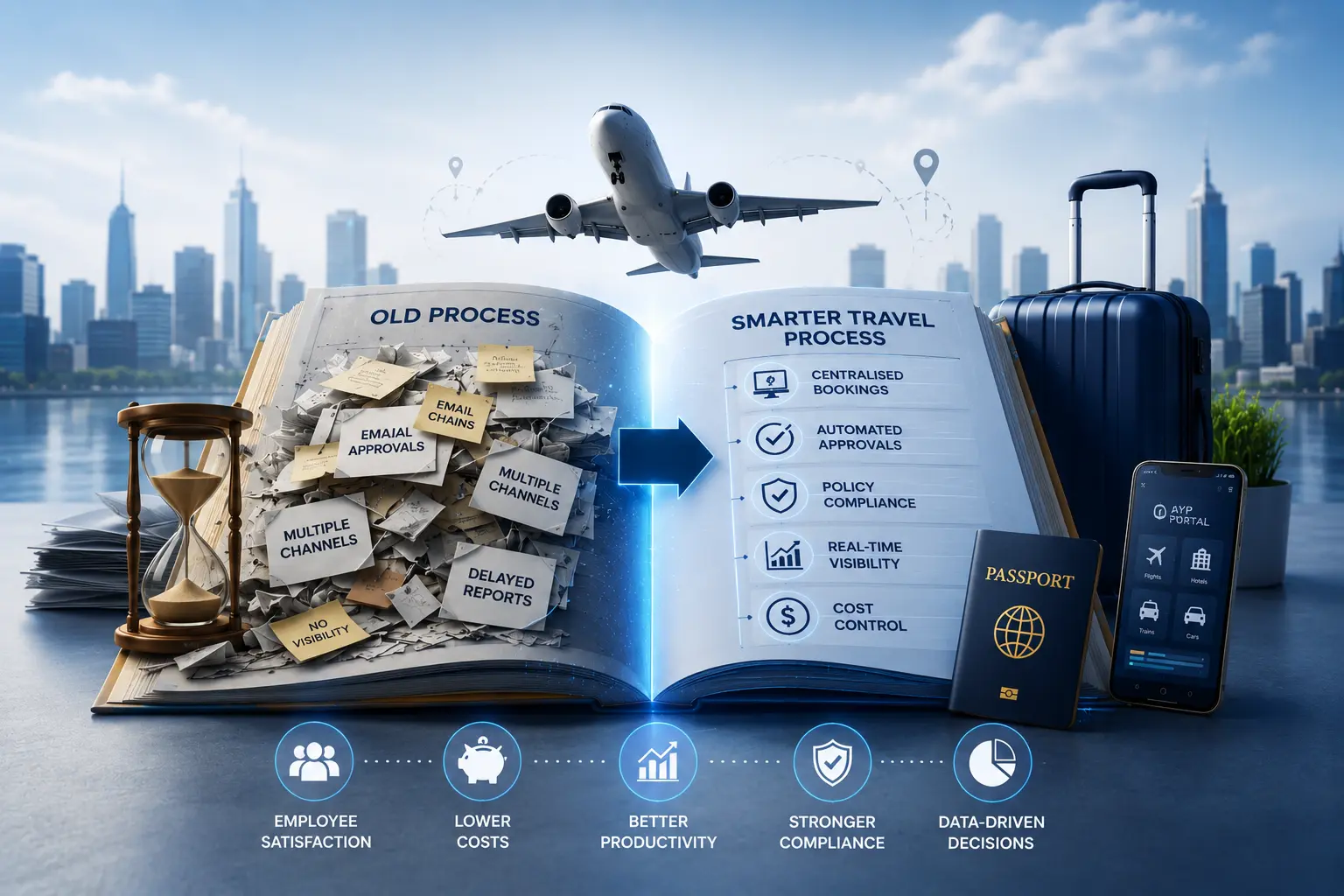
Is your business travel approval process still ancient?

Mr. Stephen says “It takes minimum 8 to 9 hours to receive an approval for my business trip”. Do your employees face the same delay in approval as Stephen? You may have an approval process involving numerous e-mails and discussions over the phone. Well, that sounds ancient as with advancement in travel technology travel approval can be made as quick as in fifteen minutes.

What is pre-trip approval?

Pre-trip approval is the initial step of the travel process where employees raise travel requests to be approved by respective approvers.

The main objective of pre-trip approval is to control undesirable travel buying behaviours of employees and cost. The approver verifies the travel request according to the travel policy of the corporate and decides to approve or decline.

What are the drawbacks of manual approval processes?

The major drawback of the manual approval process is, it includes too many levels of approval that make it tedious and confusing.  Also, multi-level approval is difficult to enforce when the process is manual. These days, travel fares tend to vary with every passing minute. By the time the travel requests reach the approver, he approves and the request is forwarded to travel admin for booking, the fares may reflect a hike.

Moreover, this enables approvers to view the other travel options available in comparison to the one chosen by the employees. According to research delay in travel approval, can lead to 9% excess travel spending.

How automated approval of corporate travel management solution works?

Corporate travel management solution is a web-based software solution that allows employees to raise travel request, get approval, book their travel, make payment and receive insights about their travel spend. It automates the entire travel process making travel easy for corporates to manage and employees to travel.

Let’s look into the approval features of corporate travel management solution. Employees log onto the corporate travel management solution. Employees select the preferred travel dates and modes. The travel request is sent to the approver for approval. The corporate travel management solution available in desktop, mobile and tablet version, has made it possible to approve the travel request from anywhere and anytime. The approver after ensuring the travel requests are as per the company policy and verifying the purpose of travel approves the requests.

How corporate travel management solution makes the approval process easier?

With the ability to approve and decline instantly from an email and application, approvers can quickly take actions. Approvers now can easily take action of multiple travel trips at the same time. Not just that, one can also review the approval history. The entire travel process becomes systematic.

Some major benefits of corporate travel management tools are as follows:

Automation: Its effective automation eliminates time-consuming manual approvals.

Insights: The meaningful reports of the automated travel management solution helps in making decisions and streamlines the auditing process. It helps approvers to review the detailed travel itineraries in a single dashboard.

Effective Change Management: It involves customizable notification that alerts the employees to change policy and encourages the right choice.

Control:  It ensures that the employees are traveling within the budgets. It also monitors the effectiveness of approvers, whether any delay has caused the company to pay more.

So, it’s high time to get rid of the ancient business travel approval process and make the corporate trips hassle-free and easy. Ensure today you are getting the best from your corporate travel program.