
Business travel is returning to full strength, but the cost structure has changed. Airfares fluctuate more often. Hotel rates in major business cities keep rising. Ground transportation and event-related expenses have followed the same path.
For finance teams and travel managers, this creates a difficult balance. Companies still need travel for sales meetings, client visits, and industry events, yet budgets must remain disciplined. Without clear controls, small price increases across hundreds of trips can quickly turn into a large financial burden.
This is why many organisations are rethinking how they manage corporate travel costs, negotiate vendor relationships, and monitor spending in real time. In an inflationary environment, visibility and policy discipline become the most important tools for keeping travel spend under control.
This guide explains practical strategies companies can use to manage business travel expenses during inflation while maintaining employee productivity and traveller satisfaction.
Why Inflation Is Affecting Corporate Travel Budgets
The travel industry operates within a complex pricing environment. Rising fuel costs, supply constraints, and growing demand have all contributed to higher prices across the travel ecosystem.
Airlines adjust fares frequently using dynamic pricing models. Hotels respond to demand surges in business hubs. Even ground transport services adjust pricing based on peak hours and availability.
For example, airlines such as IndiGo and Air India have reported strong passenger demand in recent years, which often leads to higher fares during busy corporate travel periods.
External link suggestion: You can reference industry travel demand insights from the International Air Transport Association to support data points about rising air traffic.
When these changes occur simultaneously, companies may experience:
- Higher airfare costs on frequently travelled routes
- Rising hotel prices in key business cities
- Increased last-minute booking expenses
- Difficulty predicting quarterly travel budgets
Without structured cost management, inflation slowly erodes travel programme efficiency.
The Hidden Cost Drivers in Corporate Travel
Many organisations focus only on airfare when evaluating travel costs. In reality, several smaller factors combine to create significant spending increases.
1. Last-Minute Bookings
When trips are approved late, employees often book the most expensive available options.
Common reasons include:
- Delayed approval workflows
- Poor trip planning
- Unclear travel policies
Advance booking windows are one of the most effective cost control measures.
2. Unmanaged Hotel Selection
Hotel rates can vary widely across the same city.
When travellers book outside preferred channels, companies lose the benefits of negotiated corporate rates. In business centres such as Mumbai, Bengaluru, and Delhi, hotel prices often fluctuate based on events and seasonal demand.
Preferred hotel programmes help stabilise accommodation costs.
3. Out-of-Policy Travel Choices
Without enforcement tools, travellers may choose flights or hotels that exceed policy guidelines.
Common examples include:
- Premium airline classes for short trips
- Luxury hotels outside negotiated agreements
- Flexible tickets when not required
Even small deviations repeated across many employees can significantly increase total travel spend.
4. Lack of Real-Time Spend Visibility
In many companies, finance teams only review travel expenses after the trip is completed.
This delayed visibility makes it difficult to control costs during the booking stage. By the time invoices arrive, the spending has already occurred.
How Companies Can Control Travel Costs During Inflation
Cost discipline does not mean reducing necessary travel. Instead, it involves smarter planning and better visibility into spending patterns.
Implement a Clear Corporate Travel Policy
A well-structured travel policy provides the foundation for cost control.
The policy should define:
- Approved airline classes
- Hotel price thresholds
- Advance booking requirements
- Expense reimbursement rules
Policies must remain practical. If restrictions feel unrealistic, employees will find ways around them.
Encourage Advance Booking
Airfare prices typically rise as departure dates approach.
Encouraging travellers to book earlier can lead to substantial savings.
Best practices include:
- Setting minimum advance booking requirements
- Automating approval workflows
- Providing price alerts for frequent routes
For example, flights between Chennai and Hyderabad may cost significantly less when booked two to three weeks in advance.
Negotiate Corporate Airline and Hotel Agreements
Companies that travel frequently on certain routes should explore negotiated agreements.
Corporate partnerships often provide:
- Discounted fares
- Flexible change policies
- Priority customer support
Hotel agreements can offer similar advantages, including stable pricing during peak seasons.
Negotiated vendor relationships are one of the most reliable ways to reduce inflation-related travel costs.
Centralise Travel Bookings
Centralised booking systems allow companies to maintain control over travel choices.
Benefits include:
- Visibility across all trips
- Consistent policy enforcement
- Access to negotiated rates
When employees book through different consumer platforms, organisations lose both control and valuable spending insights.
Use Travel Data to Identify Cost Trends
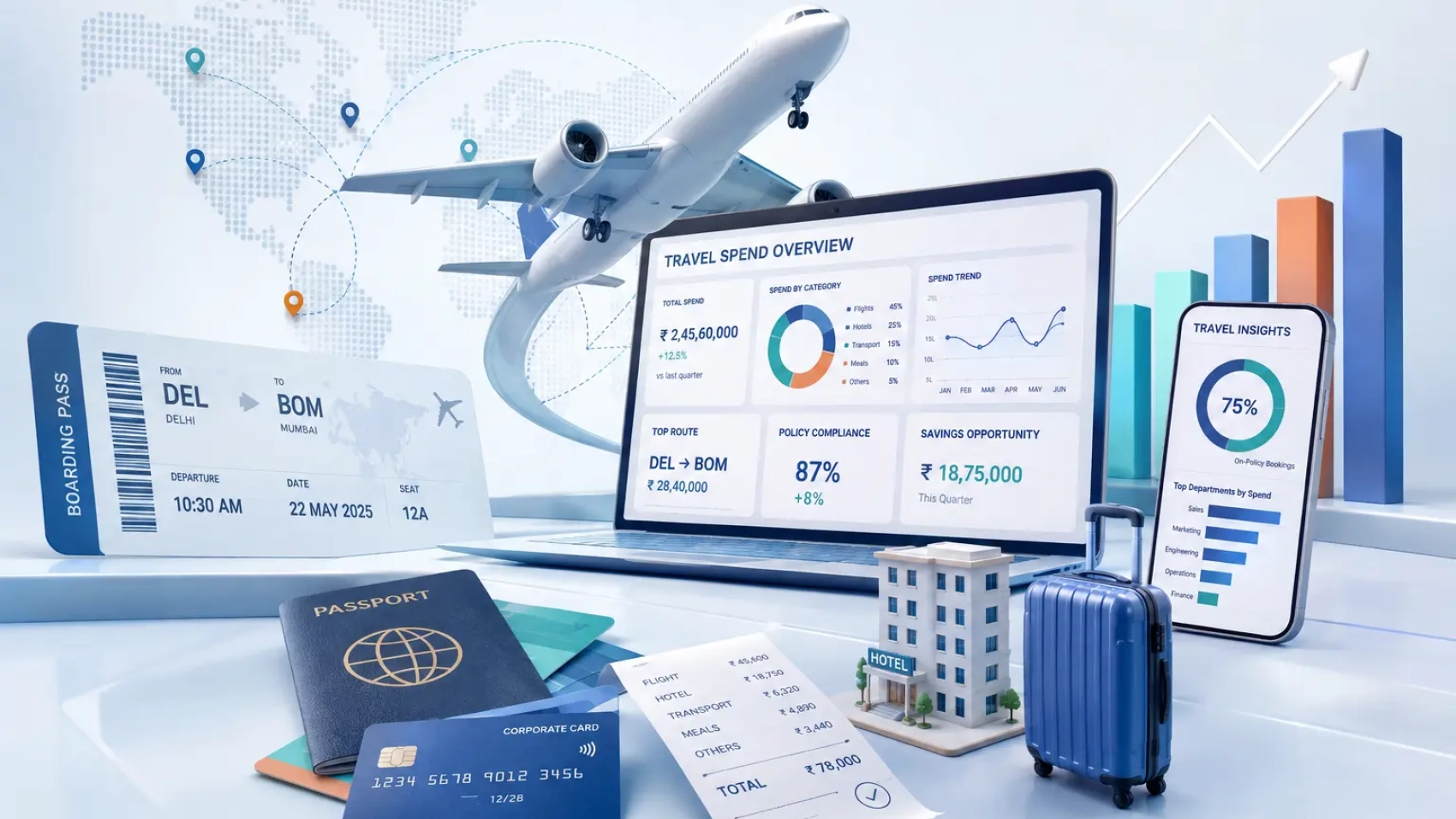
Travel analytics helps companies understand where money is being spent.
Useful data points include:
- Most travelled routes
- Average airfare trends
- Hotel price patterns
- Policy compliance rates
This information allows travel managers to adjust policies and vendor partnerships based on real usage patterns.
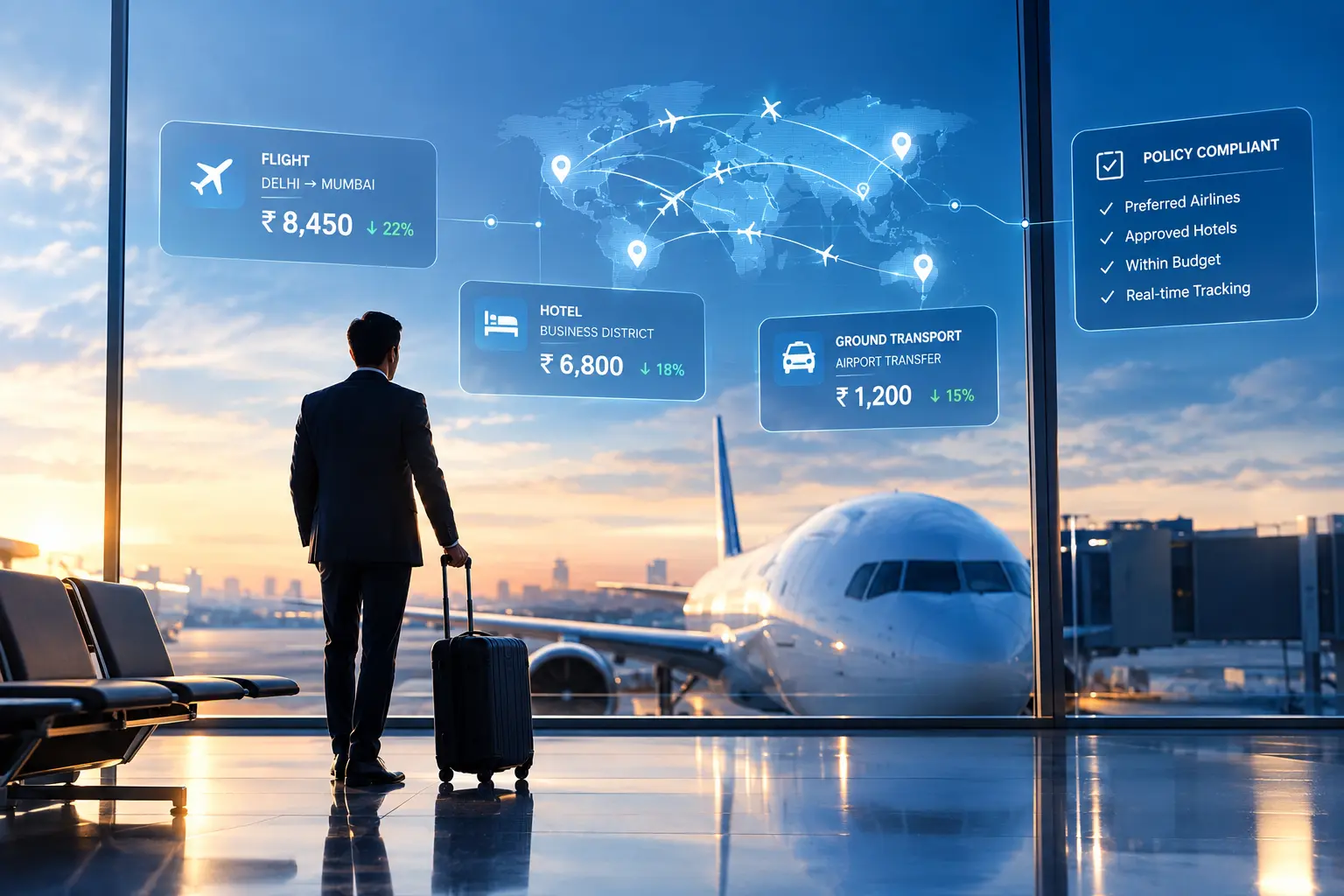
The Role of Technology in Managing Travel Inflation
Modern travel management platforms help organisations respond to inflation more effectively.
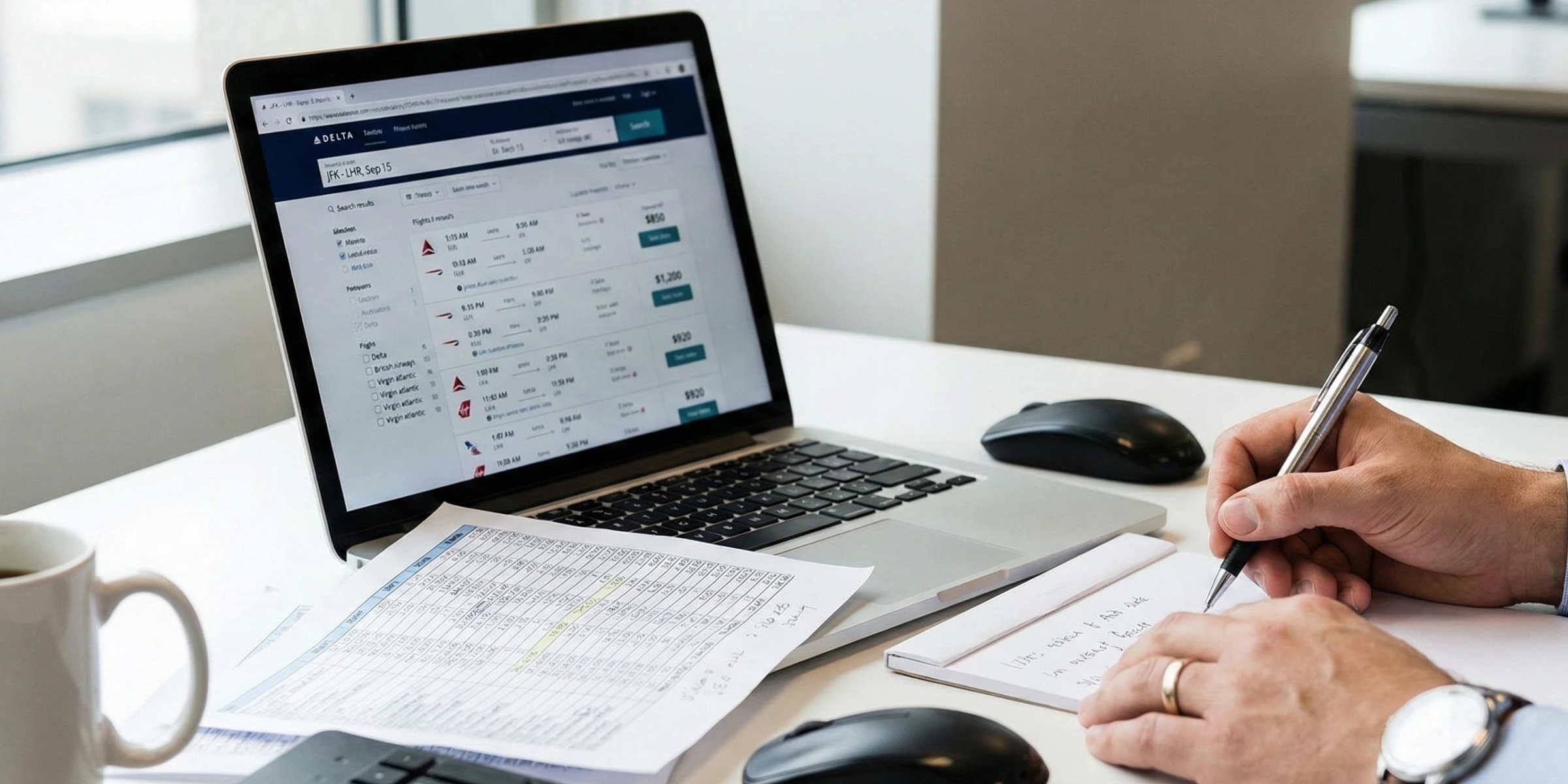
Instead of relying on spreadsheets or manual tracking, companies can use integrated systems that provide:
- Automated travel approvals
- Policy enforcement during booking
- Real-time cost visibility
- Consolidated reporting
These tools allow travel managers to make informed decisions rather than reacting after expenses occur.
Technology also helps identify opportunities for savings through route optimisation and vendor negotiations.
Balancing Cost Control With Traveller Experience
Cost management must not come at the expense of employee wellbeing.
Business travellers still require comfortable and reliable travel arrangements to perform effectively.
Companies should focus on smart cost control, not extreme restrictions.
Examples of balanced policies include:
- Allowing premium seating for long international flights
- Providing flexible ticket options for high-value client meetings
- Selecting safe and comfortable hotels within policy limits
When employees feel supported during travel, policy compliance improves naturally.
Creating a Culture of Responsible Travel Spending
Travel cost control works best when employees understand the broader financial impact.
Organisations can encourage responsible travel behaviour through:
Traveller Education
Short training sessions can help employees understand:
- Why travel policies exist
- How inflation affects company budgets
- Best practices for booking affordable travel
Transparent Communication
Sharing travel spend insights with departments encourages accountability.
For example, showing teams how much they spend annually on flights between Delhi and Mumbai can highlight opportunities for more efficient scheduling.
Leadership Example
Senior executives should follow the same travel policies as the rest of the organisation whenever possible.
When leadership demonstrates cost awareness, the rest of the company is more likely to adopt the same approach.
Monitoring Travel Performance and Savings
Managing travel costs during inflation requires continuous monitoring.
Key performance indicators may include:
- Average ticket price per route
- Percentage of advance bookings
- Policy compliance rate
- Total travel spend per department
Regular reporting helps identify trends early and prevents budget overruns.
Finance teams can use these insights to refine policies and renegotiate supplier contracts.
Preparing for Future Travel Cost Volatility
Inflation cycles may rise and fall, but travel pricing volatility is likely to remain.
Companies that build flexible and data-driven travel programmes will be better prepared for future market shifts.
Important long-term strategies include:
- Maintaining strong vendor relationships
- Investing in travel management technology
- Updating travel policies regularly
- Monitoring global travel trends
Industry organisations such as the International Air Transport Association often publish insights on travel demand and pricing trends that can help companies plan ahead.
Frequently Asked Questions
Why are business travel costs increasing?
Travel costs are rising due to inflation, higher fuel prices, strong travel demand, and limited supply in airlines and hotels.
How can companies reduce corporate travel expenses?
Companies can reduce travel costs by enforcing travel policies, encouraging advance bookings, negotiating vendor agreements, and using travel management platforms for better visibility.
What is the most effective way to control travel spending?
Centralised booking systems combined with clear travel policies and real-time reporting are among the most effective methods.
Should companies reduce business travel during inflation?
Instead of reducing travel completely, organisations should optimise travel planning and focus on trips that deliver measurable business value.
How does technology help manage corporate travel costs?
Travel management software provides visibility into spending, enforces policies automatically, and helps identify cost-saving opportunities through analytics.
What role do employees play in controlling travel costs?
Employees contribute by following travel policies, booking early, and selecting cost-effective options within company guidelines.
Final Thoughts
Inflation has changed the economics of business travel, but it does not have to derail corporate travel programmes.
Companies that maintain clear travel policies, negotiate strategic vendor partnerships, and monitor spending closely can continue supporting essential business trips without losing control of budgets.
The key lies in combining policy discipline, data visibility, and traveller awareness.
When these elements work together, organisations can manage travel costs effectively while still enabling the face-to-face interactions that drive business growth.
If your organisation is looking for a smarter way to manage business travel expenses, consider adopting a modern corporate travel management platform that provides full visibility, automated approvals, and cost control tools.
Book a demo today to see how better travel management can help your company stay ahead of rising travel costs.