


A business trip gets approved. An employee fills out a form, emails it to HR, waits for approval, opens three tabs to compare flights, forwards hotel confirmations, saves receipts, and scrambles to file an expense report next week.
Sound familiar? It’s inefficient—and costly.
Most companies know manual travel management wastes time. What they don’t see is how much money it quietly drains each month. The real losses aren’t just in airfare or hotel rates, but in the hidden costs buried within your processes.
Here are seven of them—and how to eliminate each one.
1. Time Theft from High-Value Employees
Your travel manager isn’t hired to manage email threads, yet manual workflows force them to do just that.
An employee requests travel. The manager reviews, clarifies, approves, and books—hours spent on routine coordination. After the trip, receipts, reimbursements, and reports follow, each taking more time.
That’s productive work replaced by administrative tasks. Time lost here means less focus on cost optimization, vendor negotiation, and policy analysis.
Fix it: Adopt a self-service booking platform that automates approvals and keeps bookings within policy. What once took hours can take minutes, freeing your team for strategic work.
2. Missed Savings from Poor Negotiation Leverage
When employees book independently, you lose collective buying power.
Vendors offer discounts only when they see consistent volume. Scattered, untracked bookings across multiple sites make that impossible. Without consolidated data, you can’t negotiate better hotel or flight rates—or avoid last-minute surcharges.
Fix it: Centralize all bookings on one platform. The unified data shows your total travel volume and strengthens your hand in rate negotiations. Platforms with built-in corporate rates offer even faster savings.
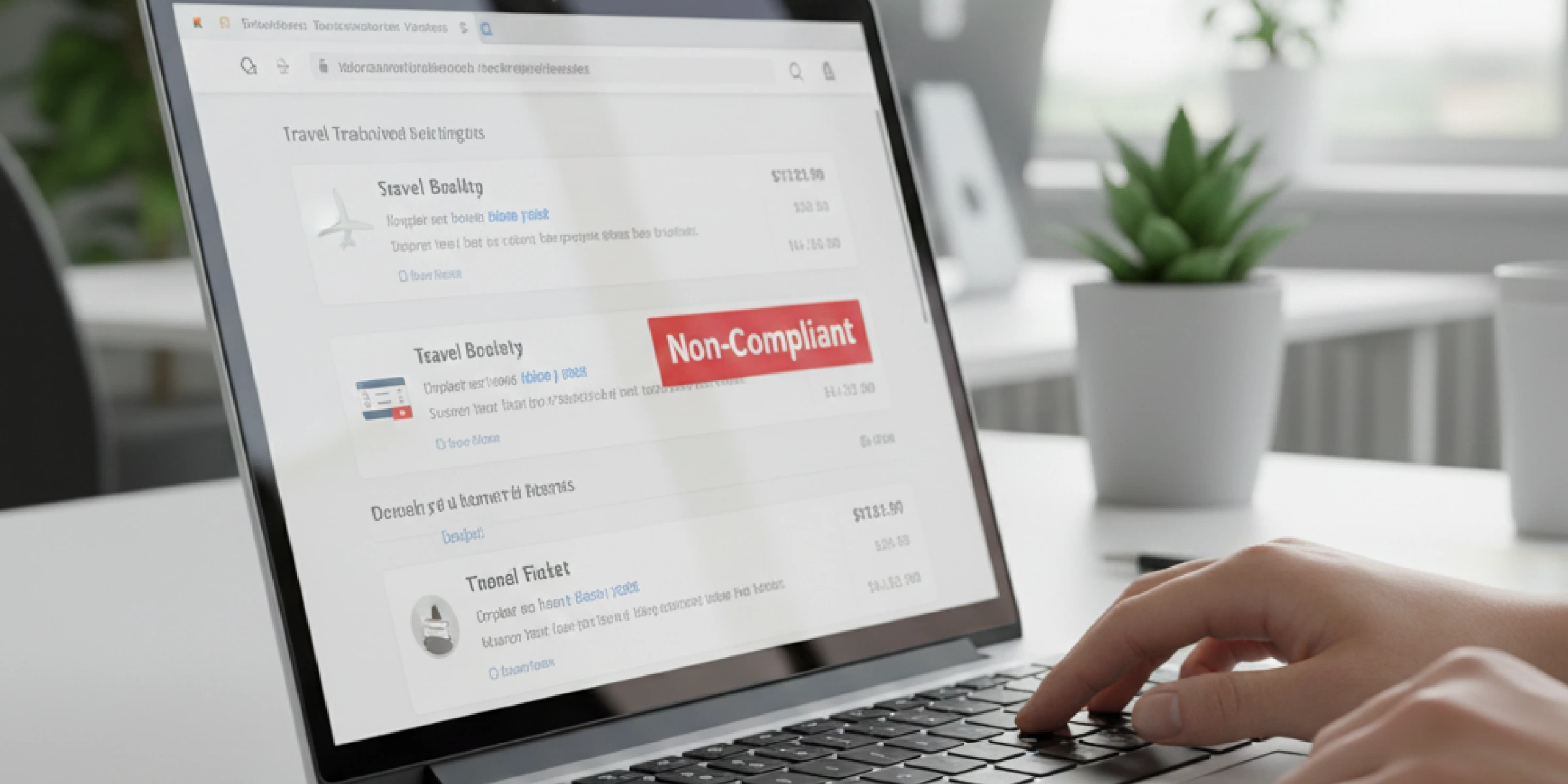
3. Policy Violations That Quietly Add Up
When booking is cumbersome, employees bend the rules. They pick what’s convenient, not what’s compliant.
Finance often catches policy breaches only during expense review—too late to reverse them. Rejecting reimbursements creates tension, so many companies absorb the cost. Over time, these unchecked exceptions inflate travel spend.
Fix it: Use software with built-in policy guardrails. It flags or blocks out-of-policy options in real time, making compliance effortless.
4. Expense Reporting Errors
Manual expense reports are error-prone on both sides. Employees forget or lose receipts, while finance teams over-reimburse due to unverified or duplicated entries.
Common issues include:
- Lost or missing receipts
- Duplicate or incorrect submissions
- Currency conversion errors
- Personal expenses mixed with business charges
Each mistake costs time for employees, managers, and finance staff.
Fix it: Integrate your booking and expense systems. When travel is booked through one platform, charges auto-populate expense reports with receipts attached. Finance gets accurate, pre-verified data without manual checks.
5. Risk Management Failures
Without real-time visibility, you can’t always tell who’s traveling or where they are. When a flight is canceled or an emergency occurs, this information gap becomes a real risk.
The blind spots:
- No centralized traveler tracking
- Slow communication during disruptions
- Missing travel insurance details
- Gaps in compliance with duty-of-care regulations
Even one poorly managed incident can have legal and financial consequences.
Fix it: Modern travel platforms offer live dashboards showing traveler locations, automated alerts for disruptions, and emergency assistance tools—all essential for duty of care.
6. Employee Frustration and Turnover
Manual travel processes frustrate employees who must front their own money and wait weeks for reimbursement. Small inconveniences—missed connections, confusing approvals, delayed payments—add up to long-term dissatisfaction.
High turnover linked to poor travel experiences is a real cost. Replacing an employee costs far more than improving their travel experience.
Fix it: Provide a simple, mobile-friendly platform that mirrors the convenience of personal booking apps. Fast confirmations, automated expense filing, and responsive support turn business travel into a smooth process.
7. Lost Strategic Insight
Manual systems scatter travel data across emails, spreadsheets, and third-party sites. Without central reporting, it’s impossible to analyze spending patterns or identify savings opportunities.
You can’t easily answer questions like:
- Which routes or cities see the most travel?
- Are vendor rates competitive?
- What’s the average cost per trip per department?
Without visibility, decisions rely on guesswork rather than data.
Fix it: Automated travel platforms consolidate and analyze all activity. Dashboards reveal trends, compliance levels, and cost patterns—turning travel from a cost center into a strategic asset.
Moving from Manual to Automated Travel Management
Transitioning doesn’t have to happen overnight. Begin with small, measurable steps.
A simple roadmap:
- Audit your current process – Identify time and cost leakages.
- Spot quick wins – Start with high-impact inefficiencies.
- Select the right tool – Choose a platform that aligns with your policies and workflow.
- Test before scaling – Pilot with one department before full rollout.
- Track results – Monitor cost savings and refine continuously.
The goal isn’t just automation—it’s better visibility, compliance, and control.

Frequently Asked Questions
What’s the biggest hidden cost of manual travel management?
Lost productivity. High-value employees spend hours managing logistics and paperwork instead of focusing on core business work.
How much can automation save?
Most companies reduce total travel costs within a year. Added savings come from improved compliance, fewer errors, and time recovered.
What features matter most in travel management software?
Look for policy enforcement, integrated expenses, traveler tracking, real-time support, and detailed analytics. Mobile access and pre-negotiated vendor rates add further value.
Will employees adopt a new system?
Yes—if it’s easier than their current process. Modern tools work like familiar consumer apps, so adoption is typically quick.
How does automation improve compliance?
By enforcing policy at booking time, not during expense review. The system displays compliant options by default and requires justification for any exceptions.
Ready to Eliminate These Hidden Costs?
Every manual process in travel management carries a hidden price tag—one that compounds with every trip.
AtYourPrice helps companies automate booking, expense management, and traveler tracking on a single platform—reducing costs, saving time, and improving compliance.
Schedule a free travel spend analysis to see how much your organization could save by switching from manual to automated travel management.
Stop letting these invisible costs drain your budget. The tools to fix them are ready—you just need to take the first step.