

how well managed business travel supports productivity

How Well-Managed Business Travel Supports Better Productivity

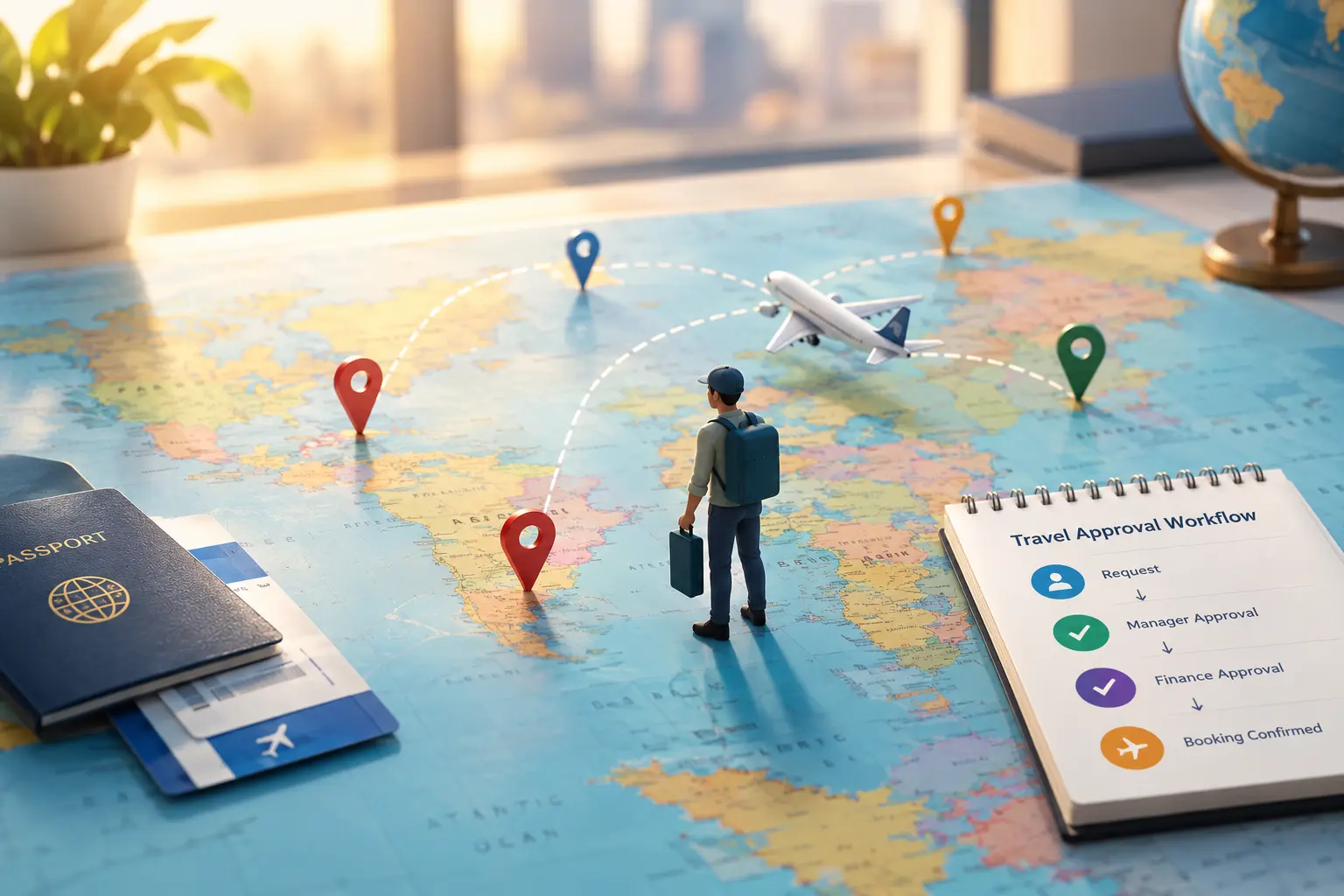
Business travel often gets discussed only when costs rise or plans fall apart. Yet when travel is planned well, it does more than move people from one city to another. It protects focus, reduces fatigue, and allows employees to do the work they travelled for in the first place.

In many organisations, productivity losses linked to travel remain invisible. Delayed approvals, rushed bookings, uncomfortable stays, and reimbursement stress quietly drain time and energy. This guide looks at how well-managed business travel directly supports better productivity, and what companies can do to make travel an enabler rather than a disruption.

The Link Between Travel Experience and Work Output

Productivity does not start at the meeting table. It starts much earlier, at the moment travel is planned and approved.

When employees spend hours arranging tickets, chasing approvals, or worrying about expenses, their mental energy shifts away from their core role. Over time, this friction affects performance, engagement, and even retention.

Well-managed business travel removes these distractions so employees can focus on outcomes, not logistics.

Why Poor Travel Management Hurts Productivity

Many companies underestimate how much inefficient travel processes slow people down. The impact is rarely dramatic, but it is consistent.

Common productivity drains include:

  • Time spent searching for flights and hotels
  • Multiple follow-ups for travel approvals
  • Unclear travel policies that lead to confusion
  • Stress around out-of-pocket expenses and reimbursements

Each issue seems small on its own. Together, they reduce the quality of work before, during, and after a trip.

why poor travel management hurts productivity

Faster Planning Means Better Use of Work Hours

In high-performing teams, travel planning is quick and predictable. Employees know where to book, what is allowed, and how fast approvals will come.

This saves productive hours in three ways:

  • Less time spent coordinating logistics
  • Fewer interruptions during core work hours
  • Reduced back-and-forth with managers and finance teams

When planning is efficient, travel supports work instead of interrupting it.

How Booking Delays Affect On-the-Road Performance

Late bookings do not only increase costs. They also affect how employees perform on the trip itself.

Rushed bookings often lead to:

  • Unfavourable flight timings
  • Long layovers or inconvenient connections
  • Hotels far from work locations

Poor travel choices increase fatigue, which directly affects attention, communication, and decision-making during meetings.

Comfortable Travel Is Not a Luxury. It Is a Productivity Tool

There is a misconception that comfort and cost control are opposites. In reality, discomfort often creates hidden costs through reduced performance.

Well-managed travel prioritises:

  • Reasonable flight timings
  • Hotels close to work locations
  • Safe and reliable ground transport

Employees who arrive rested and settled perform better, make clearer decisions, and represent the company more effectively.

The Role of Clear Travel Policies in Reducing Cognitive Load

Ambiguous travel policies force employees to guess what is acceptable. This creates hesitation and unnecessary stress.

Clear, practical policies help by:

  • Setting expectations upfront
  • Reducing approval anxiety
  • Minimising policy violations

When employees know the rules, they spend less time second-guessing and more time preparing for their work.

Centralised Booking Improves Focus and Efficiency

Centralised booking platforms simplify the entire travel journey. Instead of juggling apps, agents, and emails, employees follow one clear process.

Key productivity benefits include:

  • Faster bookings with fewer steps
  • Consistent travel options aligned with policy
  • Immediate confirmation and clarity


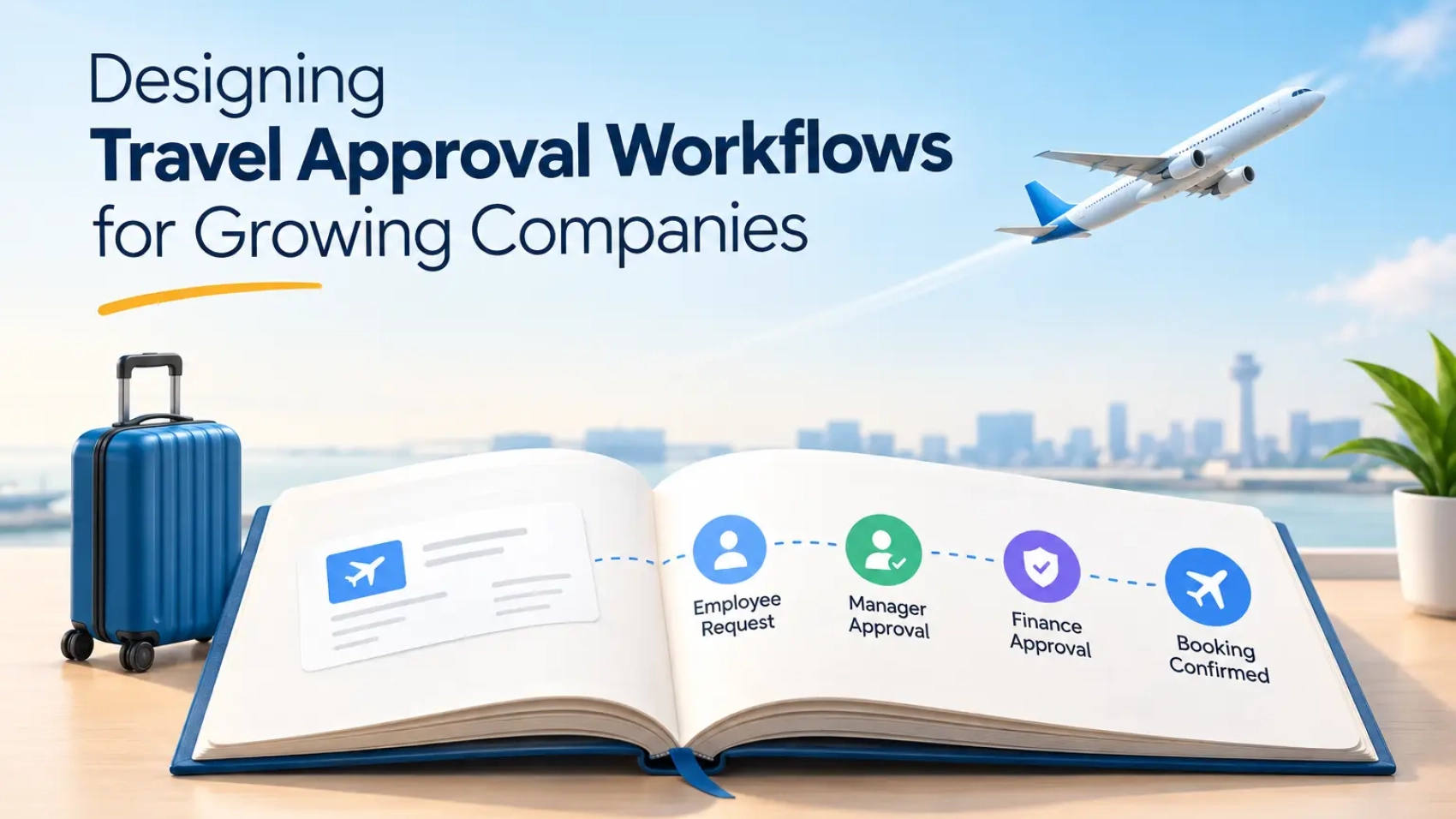
Faster Approvals Keep Momentum Intact

Delays in approval often stall business momentum. Meetings get postponed, fares increase, and teams lose urgency.

Efficient approval workflows support productivity by:

  • Reducing waiting time for travel confirmation
  • Allowing employees to plan work schedules confidently
  • Preventing last-minute disruptions

Speed in approvals is not just administrative efficiency. It is operational support.

Why Real-Time Visibility Helps Managers Support Teams

Managers play a key role in balancing productivity and cost. Without visibility into travel plans, this becomes guesswork.

Real-time visibility allows managers to:

  • See who is travelling and why
  • Identify overlapping trips or avoidable travel
  • Support teams proactively instead of reacting later

Better visibility leads to better decisions that protect both productivity and budgets.

why real time visibility helps managers

Reducing Reimbursement Stress Improves Focus

Reimbursement-based travel places a financial and mental burden on employees. This stress often carries into their work.

Common issues include:

  • Large personal expenses during travel
  • Uncertainty around claim approvals
  • Delays in reimbursement cycles

When companies move toward managed travel payments, employees stay focused on work instead of finances.

How Finance and HR Influence Travel Productivity Together

Travel productivity sits at the intersection of finance and HR. Cost control and employee experience must work together.

Finance teams contribute by:

  • Simplifying approval and compliance processes
  • Ensuring transparency in travel spend

HR teams support productivity by:

  • Reducing travel-related stress
  • Promoting fair and consistent travel experiences

Alignment between these teams creates smoother travel journeys.

Data-Driven Travel Decisions Reduce Friction

Data turns travel management from reactive to proactive. When companies track patterns, they can fix problems before they escalate.

Useful insights include:

  • Routes with frequent last-minute bookings
  • Cities causing high fatigue due to poor connectivity
  • Teams facing repeated policy exceptions

Internal link suggestion
Business Travel Analytics and Reporting

Better Vendor Management Supports Smoother Travel

Inconsistent vendor quality affects employee experience directly. Poor hotels, unreliable transport, or slow agents disrupt schedules.

With consolidated data, companies can:

  • Identify underperforming vendors
  • Negotiate better service standards
  • Standardise quality across regions

Reliable vendors reduce uncertainty and improve productivity on the ground.

Travel Planning and Work Planning Should Align

One common mistake is treating travel as separate from work planning. In reality, the two are closely linked.

Effective organisations align:

  • Meeting schedules with realistic travel timings
  • Workload expectations during travel days
  • Recovery time after long or intensive trips

This alignment prevents burnout and protects long-term productivity.

The Impact of Predictable Travel on Employee Engagement

Predictability matters more than many realise. When employees trust the travel process, they feel supported.

Predictable travel systems offer:

  • Clear timelines
  • Consistent experiences
  • Fewer unpleasant surprises

This trust translates into higher engagement and better performance.

Common Travel Management Gaps That Hurt Productivity

Even well-intentioned companies fall into familiar traps:

  • Overly rigid policies that ignore real-world needs
  • Manual processes that slow down decisions
  • Lack of ownership over travel experience

Addressing these gaps often delivers immediate productivity gains.

What High-Productivity Organisations Do Differently

Companies that see travel as a productivity tool share a few habits:

  • They design travel around employee needs, not just cost
  • They use data to guide decisions
  • They simplify processes wherever possible

Travel becomes a support system, not an obstacle.

Practical Steps to Improve Travel-Driven Productivity

Improving travel management does not require a full overhaul. Start with focused actions.

Consider:

  • Centralising bookings for frequent travellers
  • Defining clear approval timelines
  • Reviewing high-friction routes and cities

Small improvements often deliver noticeable results quickly.

External Perspectives on Travel and Productivity

Research consistently links employee wellbeing with performance, and travel plays a role in both.

Frequently Asked Questions

How does business travel affect employee productivity?
Poorly managed travel increases fatigue, stress, and time loss. Well-managed travel supports focus and energy.

Is centralised booking better for productivity?
Yes. It reduces planning time, confusion, and delays.

Do faster approvals really make a difference?
Yes. They prevent disruptions and help employees plan work more effectively.

How can companies reduce travel-related stress?
Clear policies, managed payments, and predictable processes make a significant difference.

Does comfortable travel increase costs unnecessarily?
Not always. Comfort often reduces hidden productivity losses that cost more in the long run.

Turning Travel Into a Productivity Advantage

Business travel will always involve movement, schedules, and change. What makes the difference is how well that complexity is managed.

When travel is smooth, predictable, and employee-focused, it protects time, energy, and attention. That support shows up in better meetings, clearer decisions, and stronger results.

If your organisation wants business travel to support productivity instead of quietly draining it, it may be time to rethink how travel is planned and managed.
Speak with our team or book a demo to see how a smarter approach to business travel can help your teams perform at their best.

ai in corporate travel useful tool passing trend

AI in Corporate Travel: Useful Tool or Passing Trend

Artificial intelligence has worked its way into nearly every part of modern business. Corporate travel is no exception. Many organisations now experiment with AI to manage bookings, analyse spend, and improve the traveller experience. The question that often comes up is simple. Is AI genuinely transforming business travel or is it another short-lived idea that will fade once the excitement settles?

This guide aims to give a grounded view. It explains what AI can realistically do today, where it still falls short, and how thoughtful adoption helps companies build smoother and more predictable travel programmes.

How AI Fits Into Corporate Travel Today

AI plays a practical role in a few areas that have matured enough for daily use. These tools are not meant to replace established travel systems. They work better as supportive layers that reduce manual effort and provide useful insights.

Search and Booking Assistance

AI can scan through large sets of flight and hotel data. It identifies patterns in price movements, route preferences, and availability. Some travel managers use these tools to shortlist options faster. It helps when dealing with heavy travel days or complex itineraries.

AI can also offer small but important conveniences such as suggesting faster connections, flagging unusual fare spikes, or pointing out dates that have a higher probability of price drops.

Policy Alignment and Compliance

AI systems can compare booking choices with corporate travel rules. They highlight possible compliance issues before approval. This reduces back-and-forth communication and allows teams to stay within company guidelines with less supervision.

Spend Intelligence

Every organisation struggles with controlling travel costs and spotting unnecessary spending. AI tools can read through invoices, analyse categories, and point out irregular patterns. This helps finance teams make better decisions without digging through spreadsheets for hours.

Traveller Support

Chat-based virtual help tools guide travellers through routine questions. They can offer flight information, booking details, or trip reminders. While these responses are still improving, they lighten the support load for travel desks and agencies.

how ai fits into corporate travel

What AI Cannot Solve Completely

AI brings speed and structure, but it cannot replace human judgment. Business travel involves unpredictable scenarios. A delayed flight, a missed connection, or a last-minute meeting change still requires human support that understands context and decision making.

A few limitations are worth keeping in mind.

Nuance in Complex Trips

Travel that involves multi-city schedules, varied client commitments, or tight time windows cannot rely solely on AI-generated recommendations. These trips need a clear understanding of the purpose of travel and the nature of the work.

Risk and Safety Considerations

AI helps with information, but it does not interpret wider global developments as accurately as experienced travel teams. Human involvement remains essential when assessing risks, reviewing destinations, or responding to urgent situations.

Vendor Reliability and Data Depth

AI models are only as strong as the data they receive. If hotel or airline data is outdated, limited, or inconsistent, the suggestions will not be fully reliable. This is why professional travel systems still use direct sources that guarantee stable information.

The Role of Modern Travel Platforms

Modern travel platforms combine traditional travel infrastructure with AI-based layers. This combination works better than either approach on its own.

Balanced Use of Automation

The most effective tools do not push AI as the hero of the story. Instead, they treat it as a supportive component. Automation handles repetitive tasks, while the core travel engine maintains accuracy, negotiated fares, and corporate controls.

Data-driven Decision Making

AI identifies patterns that might be easy to miss. Travel managers gain a clearer view of spending behaviour, route efficiency, and supplier performance. They can make more confident budgeting decisions and negotiate with better data in hand.

More Personalised Travel

Some platforms use AI to understand traveller preferences. For example, frequent fliers may lean toward specific timings, certain cabin layouts, or preferred layover durations. AI observes these patterns over time and helps refine recommendations.

How AtYourPrice Integrates AI Thoughtfully

AtYourPrice uses AI in a practical and grounded way. The goal is not to replace proven travel processes but to enhance them.

Improved Search and Filtering

The platform uses AI-driven ranking to help users sift through large sets of airline and hotel options. The choices still come from stable and verified sources, but the AI layer helps reorder the results in a more meaningful way.

Smarter Spend Understanding

AI helps identify movements in travel spend, outliers, and early signs of cost inflation. Finance and travel teams get clearer visibility without needing to run multiple reports.

Cleaner Workflows

Routine checks, repetitive steps, and basic verification tasks are simplified through automated logic. This shortens booking cycles and lightens manual loads for travel desks.

Steady Reliability of Core Systems

The strength of the platform continues to come from its structured travel engine, direct connections, and established processes. AI supports these components rather than replacing them, which keeps the system stable even during high demand or rapid changes.

This balanced approach helps organisations adopt AI confidently without worrying about unpredictable results.

Signs That AI in Corporate Travel Is Here to Stay

Several developments indicate that AI in business travel will continue to grow in a sustainable way.

1. Rapid Improvement in Data Processing

AI models can now read structured and unstructured travel data with far better accuracy. This helps travel managers analyse spend, policy alignment, and vendor performance.

2. Rising Pressure to Optimise Budgets

Companies now pay closer attention to travel ROI. AI tools make it easier to interpret cost patterns and uncover savings that would otherwise stay hidden.

3. Combined Human and Machine Support

The most successful travel programmes blend human expertise with automated features. As this model strengthens, AI becomes a natural part of travel operations.

4. Growth of Scalable Travel Platforms

Platforms that use AI in a controlled and measured way see higher adoption rates. This steady interest shows that AI is becoming a dependable tool rather than a temporary trend.

signs that ai corporate travel is here to stay

FAQ Section

Is AI reliable for corporate travel decisions?

AI is reliable for tasks that involve pattern analysis and rapid data processing. It is helpful for search, spend visibility, and policy checks. Complex or high-risk decisions still require human oversight.

Will AI reduce the need for travel managers?

No. AI reduces repetitive work and provides better insights. Travel managers still guide strategy, risk evaluation, and vendor relationships.

Does AI help lower travel costs?

Yes. AI helps identify overspending, find patterns in booking behaviour, and show early indicators of cost movement. These insights support better budgeting.

Can AI personalise business travel?

AI observes traveller preferences and habits. This helps refine future booking suggestions and remove unnecessary steps.

Is AI in corporate travel a long-term development?

AI is advancing steadily. Its role in travel will continue to expand as platforms and data sources grow more refined.

Conclusion

AI is not a passing trend in corporate travel. It has already settled into the core of how companies search, book, and manage trips. The most successful programmes use AI as a supportive layer that strengthens reliability, improves visibility, and simplifies decision making.

Businesses that adopt AI with a balanced mindset gain smoother workflows and a clearer view of travel spend. If you would like to explore how these tools can support your corporate travel plans, you can reach out to our team or request a demo to see the experience firsthand.

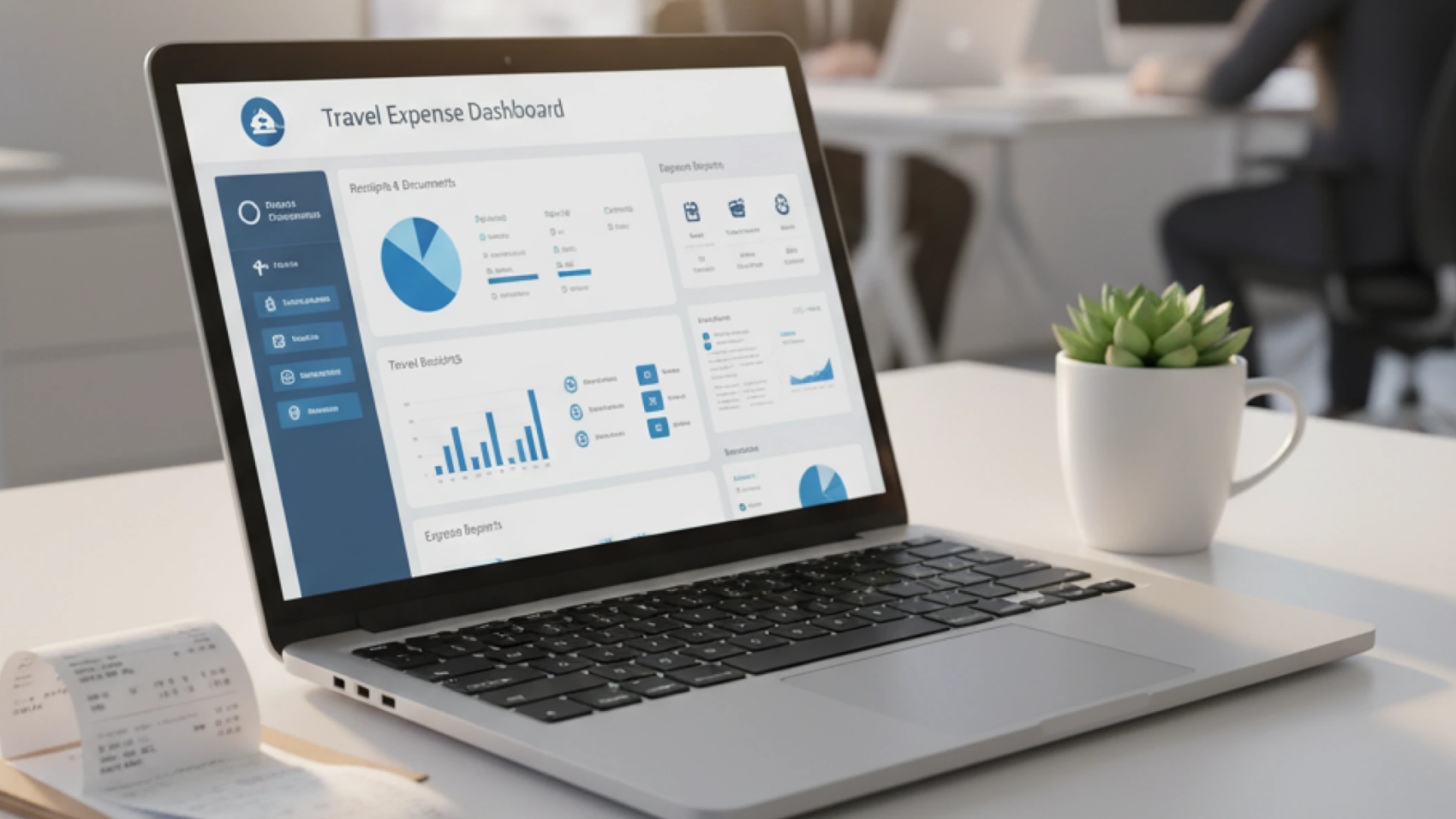
practical guide to streamlining corporate travel expenses

A Practical Guide to Streamlining Corporate Travel Expenses

Managing corporate travel expenses often feels like juggling receipts, reimbursement forms, and policy approvals — all while trying to stay within budget.
But with modern technology and smarter workflows, what used to be a tedious process can now be seamless, transparent, and fully optimized.

In this guide, we’ll unpack how businesses can streamline travel expense management — from the booking stage to reporting — and explore how solutions like AtYourPrice (AYP) help simplify every step.

Why Travel Expense Management Still Feels Broken

Even with digital tools in place, many organizations still face the same roadblocks when it comes to corporate travel expenses.
Here’s why:

  • Fragmented systems: Bookings, approvals, and expense reports often sit in separate platforms.
  • Manual processes: Employees still upload receipts, forward invoices, or fill out spreadsheets.
  • Limited visibility: Finance teams struggle to track real-time spend or identify policy violations.
  • Policy confusion: Travelers aren’t always sure what’s reimbursable — or what’s not.

These inefficiencies don’t just waste time; they inflate costs and reduce compliance.
A study by GBTA found that companies lose up to 20% of potential travel savings due to manual or disjointed expense processes.

So how can organizations regain control?
By simplifying and automating travel expense management — from start to finish.

What Does “Streamlining Corporate Travel Expenses” Really Mean?

To streamline isn’t just to “go digital.”
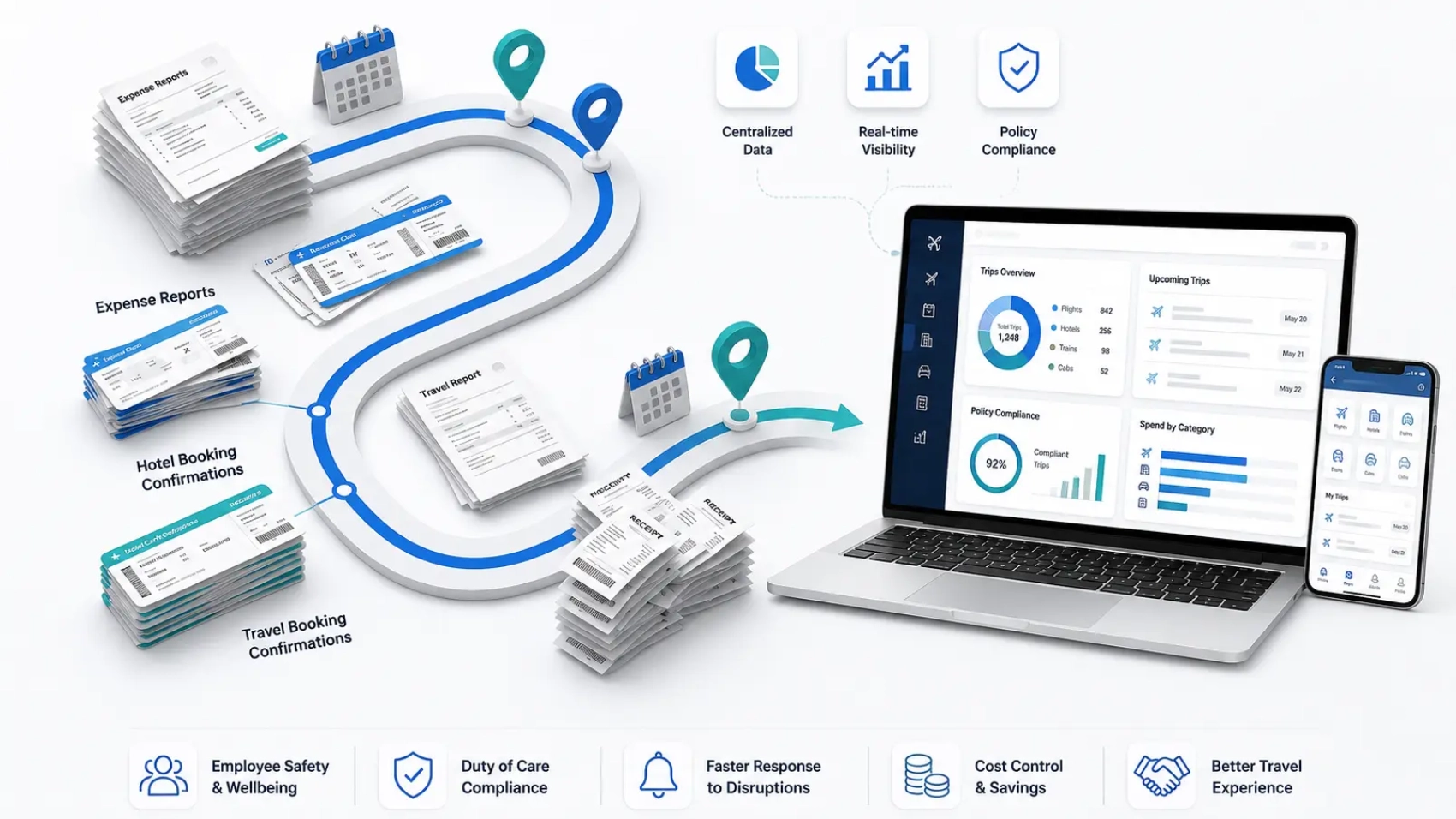
It means removing friction from every step of the travel spend journey — making it faster, smarter, and more transparent for both employees and finance teams.

A streamlined process includes:

  1. Smart booking workflows
    Travelers book flights and hotels that are already policy-compliant.
  2. Automated approvals
    Managers approve travel requests instantly via pre-set rules.
  3. Integrated expense tracking
    Every booking automatically syncs with the expense report — no manual entry.
  4. Real-time visibility
    Finance teams see total travel spend as it happens, not weeks later.
  5. Accurate reconciliation
    All invoices, taxes (like GST), and vendor payments align perfectly with the budget.

That’s the foundation of efficient corporate travel management — one where technology and policy work hand in hand.

what does streamlining corporate travel expenses really mean

The Hidden Costs of Manual Expense Management

Before jumping into solutions, it’s important to understand what traditional travel expense processes actually cost businesses.

Here are the hidden expenses most organizations overlook:

1. Time Costs

Each manual reimbursement claim can take 20–30 minutes to process. Multiply that by hundreds of trips per year, and the time loss is significant.

2. Policy Leakage

Without clear automation, employees often book outside approved channels, leading to:

  • Missed corporate rates
  • Duplicated taxes
  • Non-compliant vendors

3. Errors and Fraud

Manual entries and receipt uploads increase the risk of:

  • Duplicate claims
  • Fake receipts
  • Missed credit card reconciliations

4. Lost GST Input Credits

When invoices are not GST-compliant or misfiled, companies miss out on reclaimable tax benefits — a common issue in India.

By automating and centralizing travel expenses, businesses can reduce these costs while improving overall financial accuracy.

How to Streamline Corporate Travel Expenses: Step-by-Step

Let’s break down the key steps every organization can take to simplify expense management — whether you’re using a full-scale platform like AtYourPrice or optimizing existing workflows.

Step 1: Create a Clear, Updated Travel Policy

An outdated or vague travel policy is one of the biggest causes of overspending.
A modern travel policy should include:

  • Approved booking channels and vendors
  • Spend limits for air, hotel, and ground travel
  • Reimbursement timelines and documentation requirements
  • Guidelines for last-minute changes or cancellations

Tip: Make your travel policy easy to access — ideally integrated within your booking tool. That way, travelers don’t have to search through PDFs before booking.

Step 2: Centralize Bookings and Expenses

A single, unified platform for bookings and expenses saves time and ensures accuracy.
With platforms like AtYourPrice, businesses can:

  • Book flights and hotels from multiple sources in one place
  • Automatically capture trip details and costs
  • Generate consolidated invoices
  • Track travel budgets in real time

This integration eliminates the need for separate booking engines, manual data entry, or back-and-forth emails.

Step 3: Automate Approvals and Reporting

Manual approvals often create unnecessary bottlenecks.
By setting up predefined approval workflows, managers only need to review exceptions — not every request.

Benefits include:

  • Faster travel confirmations
  • Fewer policy violations
  • Instant audit trails

Automation also simplifies reporting. Instead of manually collating expense data, finance teams can access pre-built dashboards that show total spend, top travelers, and vendor costs in a few clicks.

Step 4: Ensure GST-Compliant Invoicing

In India, GST compliance is a crucial part of travel expense management.
Missed or incorrect invoices can result in lost tax credits — and compliance headaches during audits.

When travel platforms issue GST-compliant invoices directly, finance teams can:

  • Claim accurate input tax credits
  • Maintain cleaner audit records
  • Simplify reconciliation at month-end

This is one of the biggest advantages of using an integrated travel solution instead of consumer-grade booking sites.

Step 5: Use Data to Optimize Spend

The real power of automation lies in data-driven insights.
By tracking spend patterns, companies can uncover:

  • Frequent policy exceptions
  • High-cost routes or vendors
  • Opportunities for corporate rate negotiations

For example, a company may discover that shifting 30% of domestic air travel to a specific airline yields lower fares and better flexibility.
Such insights are only possible when data is centralized and transparent.

Common Roadblocks (and How to Overcome Them)

Even with the right tools, businesses can struggle to fully streamline travel expenses.
Here are a few challenges and practical ways to overcome them:

Challenge

Solution

Employees book outside the system

Enforce policy-approved booking channels with integrated options like AYP.

Delayed reimbursements

Use automated claim workflows tied to trip completion.

Missing receipts or invoices

Centralize all booking confirmations and receipts in one dashboard.

Lack of visibility for finance teams

Implement real-time spend dashboards and alerts.

Difficulty reconciling vendor payments

Use consolidated billing and integrated payment reports.

By tackling these issues, organizations can move toward truly seamless travel expense management.

common roadblocks and how to overcome

Why Technology Matters in Travel Expense Management

Corporate travel today isn’t just about managing costs — it’s about managing efficiency, compliance, and experience.
Here’s what modern travel management tools bring to the table:

  • Real-time spend visibility
  • Mobile booking and approvals
  • Integrated expense reporting
  • Policy enforcement at the point of booking
  • Centralized vendor invoicing

Even if your organization isn’t ready for a full automation suite, adopting one or two of these features can make an immediate difference.

How AtYourPrice Fits In

AtYourPrice (AYP) helps businesses simplify and optimize their corporate travel processes by combining booking, approvals, and spend tracking in one place.
While AYP’s focus isn’t solely on expense reporting, its unified platform supports companies in:

  • Centralizing travel bookings across air, hotel, and rail
  • Tracking total travel spend in real time
  • Generating transparent invoices for faster reconciliation
  • Ensuring compliance with company travel policies

In short, AYP helps finance and HR teams reduce manual work, gain better visibility, and ensure every trip stays on budget.

Explore how AtYourPrice can simplify your company’s travel management — book a quick demo here.

Frequently Asked Questions

1. What are the best practices for managing corporate travel expenses?

The best practices include centralizing bookings, automating approvals, ensuring policy compliance, and maintaining GST-compliant invoicing.

2. How can companies reduce travel expense fraud?

Use integrated systems where bookings and receipts are automatically tracked, reducing opportunities for duplicate or fake claims.

3. Why is visibility important in travel spend management?

Real-time visibility helps finance teams detect overspending early, negotiate better vendor rates, and improve budgeting accuracy.

4. How does automation improve travel expense management?

Automation eliminates manual data entry, speeds up reimbursements, and ensures compliance by applying rules during booking.

5. Can smaller businesses benefit from travel management platforms like AtYourPrice?

Absolutely. Even mid-sized or growing businesses can save time and money by consolidating travel bookings and gaining full visibility into spend.

Conclusion: Simplify Today, Save Tomorrow

Managing corporate travel expenses doesn’t have to be complicated.
By centralizing bookings, automating workflows, and maintaining transparent expense tracking, businesses can reclaim control over their travel budgets — and reduce hidden costs.

AtYourPrice empowers organizations to do exactly that: make corporate travel smarter, faster, and more cost-efficient.

Ready to streamline your company’s travel management? Book a demo with AtYourPrice today and see how easy it can be.