

Introduction: When Business Trips Don’t Go as Planned
Flight delays, cancellations, sudden strikes, or weather events—business travelers know disruptions are part of the deal. But for companies, the stakes are higher. Every missed connection or rescheduled flight doesn’t just cause stress, it impacts productivity, client relationships, and costs.
The question isn’t if travel disruptions will happen. It’s how prepared your company is when they do. With the right systems and strategies in place, travel hiccups don’t have to become disasters. This blog explores the most common disruptions in corporate travel, their hidden costs, and how companies can stay in control.
Understanding Business Travel Disruptions
What Counts as a Travel Disruption?
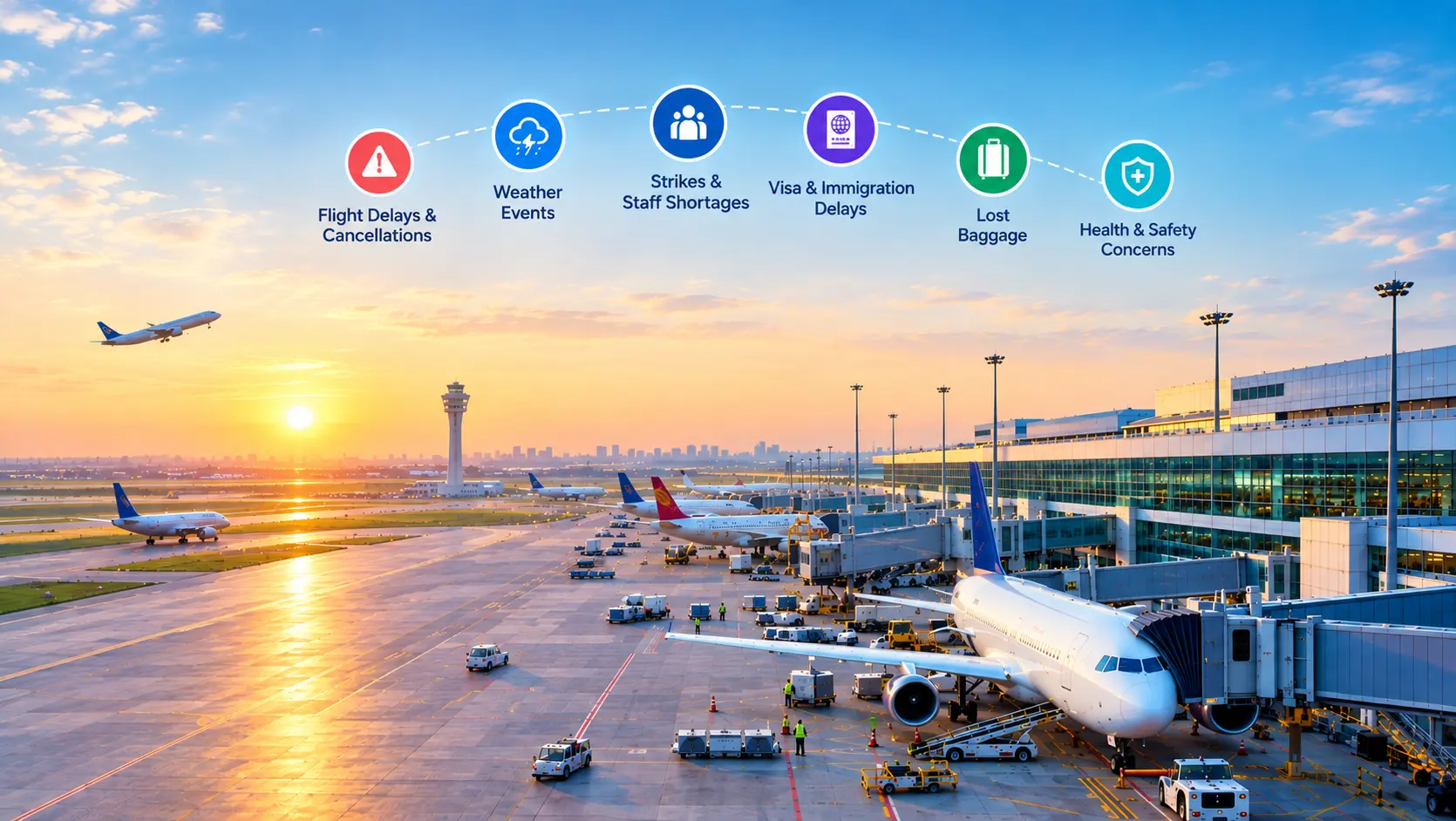
A travel disruption is any unexpected change that prevents a traveler from following their original itinerary. This can include:
- Flight delays and cancellations
- Weather-related events (storms, heavy rain, snow)
- Airline strikes or staffing shortages
- Visa or immigration delays
- Lost baggage
- Sudden health or safety concerns in the travel destination
Why Disruptions Hit Businesses Hard
For leisure travelers, a delay is an inconvenience. For companies, it’s a chain reaction:
- Missed client meetings
- Added accommodation and rebooking costs
- Employee frustration and fatigue
- Increased administrative work for travel managers
- Reduced productivity during the trip
According to the Global Business Travel Association (GBTA), disruptions cost companies billions annually in lost productivity and unexpected expenses.
The Hidden Costs of Travel Disruptions
Direct Financial Losses
- Rebooking fees
- Last-minute fare hikes
- Extra hotel nights and meals
Operational Disruption
- Meetings that need to be rescheduled or canceled
- Project delays
- Damaged client relationships
Traveler Well-Being
- Stress, exhaustion, and burnout
- Safety risks if stranded in an unfamiliar location
- Reduced morale for frequent travelers
These hidden costs underline why companies can’t treat disruptions as “just part of travel.” Proactive planning is essential.
How Companies Can Stay in Control
1. Centralize Travel Bookings
When employees book through multiple websites, managing changes becomes chaotic. A centralized travel management platform ensures all data is in one place, making it easier to act quickly during disruptions.
AtYourPrice simplifies this by consolidating bookings and approvals into one system, giving travel managers full visibility.
2. Use Low Fare Search Automation (LFSA)
One of the biggest frustrations during disruptions is the skyrocketing cost of last-minute rebookings. LFSA technology helps companies lock in lower fares by monitoring price drops and automatically rebooking when cheaper options become available.
This not only saves money but reduces the pressure of having to make snap decisions during chaos.
3. Prioritize Duty of Care
Employees should never feel unsupported when stranded. Companies must have systems that:
- Track travelers in real time
- Provide emergency contacts and assistance
- Offer clear communication channels
Pro tip: Duty of care isn’t just about safety. It shows employees their well-being is valued, which strengthens trust and retention.
4. Build Flexibility Into Policies
Rigid travel policies can backfire during disruptions. Allow some flexibility for rebookings, upgrades, or alternative routes when emergencies arise.
This ensures employees don’t waste hours waiting for approvals when they need immediate solutions.
5. Automate Approvals During Emergencies
During disruptions, time is everything. Companies should set up policy-based auto-approvals for specific scenarios (e.g., hotel rebookings under a certain budget).
AtYourPrice’s approval workflows can be customized so employees act fast without bypassing policy.
6. Train Employees on Travel Protocols
Travelers often panic when disruptions hit because they don’t know the process. Companies should educate staff on:
- Whom to contact first
- How to rebook under policy
- Safety steps during delays or cancellations
7. Partner with Reliable Vendors
Strong relationships with airlines, hotels, and transport providers pay off during crises. Many vendors offer priority support for corporate clients with ongoing partnerships.
8. Track and Analyze Disruption Data
Every disruption is a learning opportunity. Companies should measure:
- Frequency of disruptions
- Associated costs
- Traveler satisfaction scores
This data helps refine travel policies and identify weak spots.
Proactive Strategies to Reduce Disruptions
Leverage Technology
- Real-time flight alerts keep travelers updated before they reach the airport.
- Mobile apps centralize itineraries and notifications.
- Automation reduces manual intervention and errors.
Plan for Alternatives
Always have a Plan B. Encourage employees to check secondary airports, train options, or virtual meeting setups if travel becomes impossible.
Incorporate Travel Insurance
Comprehensive policies that cover delays, cancellations, and lost baggage protect both the company and the traveler.
Case in Point: How Smart Travel Tech Makes the Difference
Imagine this: an executive flying to London faces a cancellation due to weather. Traditionally, the company would spend hours on calls with airlines, pay inflated last-minute fares, and cover unexpected hotel costs.
With AtYourPrice’s LFSA technology, the system would have already tracked fare changes and rebooked automatically at the lowest available rate. The employee would receive real-time updates on the mobile app, while the company maintains cost control and compliance.
FAQs: Business Travel Disruptions
1. What are the most common business travel disruptions?
Flight delays and cancellations are the most frequent, but weather events, strikes, and visa issues also play a significant role.
2. How can companies reduce the cost of travel disruptions?
Centralizing bookings, using automation like LFSA, and tracking unused tickets help minimize financial loss.
3. What role does duty of care play during disruptions?
Duty of care ensures employee safety and well-being. Companies must provide real-time updates, support services, and quick response options when disruptions occur.
4. Should companies invest in travel insurance for corporate trips?
Yes. Insurance can cover unexpected costs like cancellations, delays, or lost baggage, protecting both the company and the traveler.
5. How does technology help manage travel disruptions?
Modern platforms like AtYourPrice provide real-time alerts, automated rebooking, and policy-based approvals, keeping costs under control and travelers supported.
Conclusion: Control the Chaos with AtYourPrice
Business travel disruptions are inevitable—but chaos isn’t. With the right mix of centralized booking, smart automation, and duty of care, companies can turn disruptions into manageable events instead of expensive crises.
Want to see how your company can stay in control, even when travel plans fall apart?
Book a free demo with AtYourPrice and discover how technology can protect your people, your budget, and your peace of mind.