

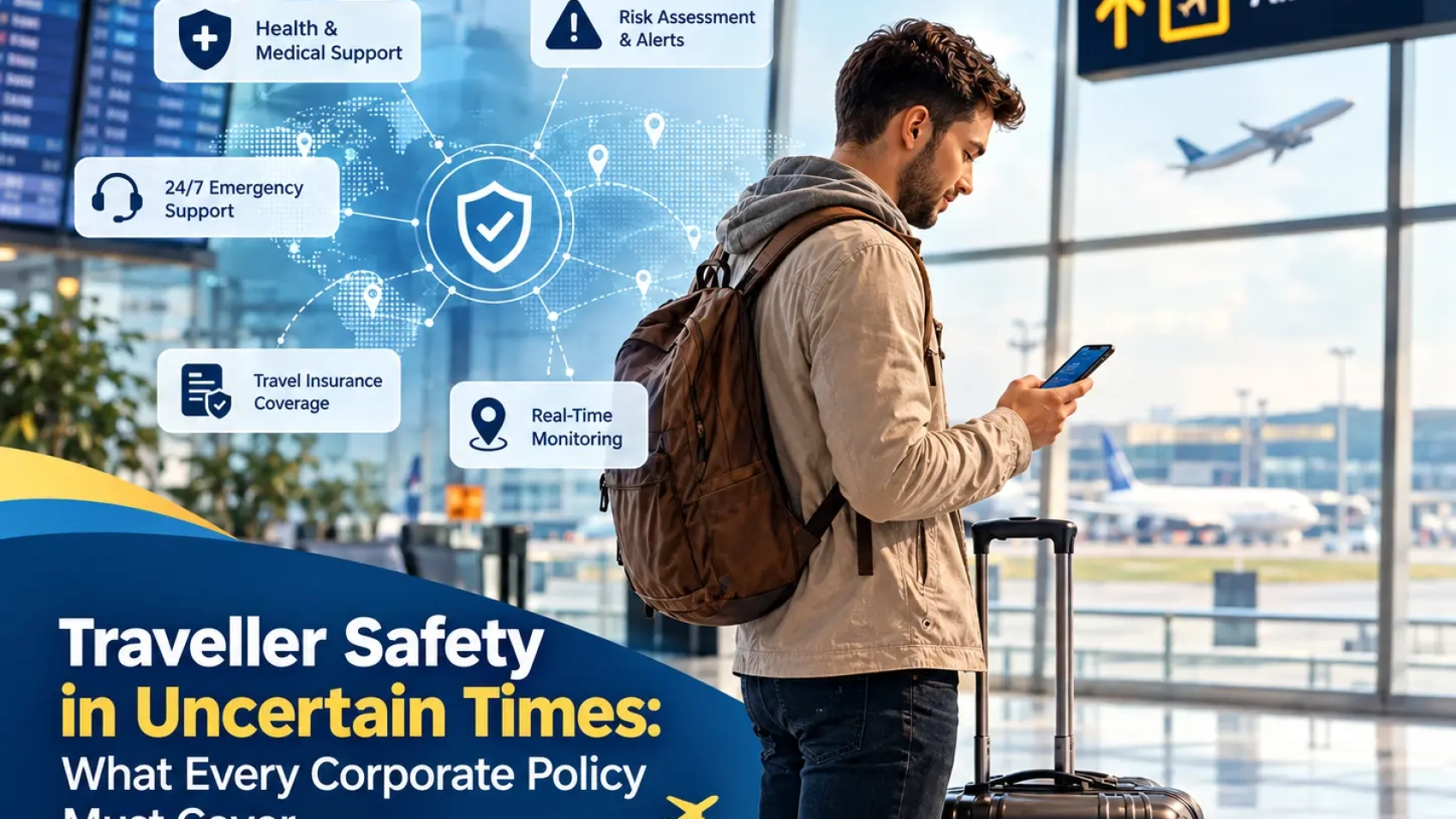
A flight is booked. Meetings are scheduled. The itinerary looks efficient.
Then a sudden protest blocks city roads. A regional airspace closure forces rerouting. A health advisory is issued overnight.
For corporate travel managers, uncertainty is no longer rare. It is routine. Traveller safety in uncertain times requires more than basic insurance and emergency contact numbers. It demands a structured corporate travel policy that addresses risk before, during, and after every trip.
This guide explains what a modern traveller safety policy must include, how to strengthen corporate duty of care, and what practical steps organisations can take to protect employees while maintaining business continuity.
Why Traveller Safety Is Now a Board-Level Concern
Business travel has become more complex. Geopolitical tensions, climate events, infrastructure disruptions, and public health advisories can affect even short domestic trips.
Senior leadership increasingly recognises that travel risk management is tied to:
- Employee wellbeing
- Legal liability
- Brand reputation
- Operational resilience
A comprehensive safety policy is no longer a compliance document. It is a strategic safeguard.
Understanding Corporate Duty of Care
Duty of care refers to an employer’s legal and moral obligation to protect employees from foreseeable risks while they travel for work.
In practical terms, this means organisations must:
- Assess travel-related risks
- Provide accurate information
- Offer support during emergencies
- Maintain communication channels
Failing to meet these responsibilities can expose companies to regulatory scrutiny and reputational damage.
Core Elements Every Corporate Travel Safety Policy Must Cover
A traveller safety policy should be clear, actionable, and easy to access. It must define both employer responsibilities and traveller expectations.
1. Pre-Travel Risk Assessment
Every trip carries a different level of exposure. Policies should outline how risk assessments are conducted before approval.
Include:
- Destination risk evaluation
- Local health advisories
- Political or civil disruption alerts
- Climate or seasonal risks
Risk categorisation helps determine whether additional approvals or precautions are required.
2. Approved Booking Channels
When employees book travel outside approved systems, visibility disappears.
Your policy should require:
- Booking through authorised travel platforms
- Centralised itinerary tracking
- Real-time reporting capability
This ensures the organisation knows where employees are in case of sudden events.
3. Emergency Communication Protocol
In uncertain times, communication must be fast and structured.
Your safety policy should specify:
- 24/7 emergency contact numbers
- Escalation hierarchy
- Response time expectations
- Alternative communication methods if networks fail
Clarity reduces confusion during high-stress situations.
4. Health and Medical Support
Health risks remain a major component of business travel risk.
Your policy must address:
- Travel insurance requirements
- Coverage limits
- Access to local medical facilities
- Emergency evacuation procedures
Provide guidance on vaccinations or preventive measures where applicable.
5. Travel Insurance and Liability Coverage
Not all travel insurance policies are equal. Organisations should verify:
- Coverage for trip cancellation due to disruption
- Emergency medical evacuation
- Personal accident protection
- Political evacuation where applicable
Clear insurance provisions protect both employees and the company.
6. Real-Time Travel Monitoring
Technology has changed traveller safety management. Real-time tracking systems allow travel managers to:
- Identify employees in affected regions
- Send instant alerts
- Coordinate assistance
Without live visibility, crisis response becomes reactive.
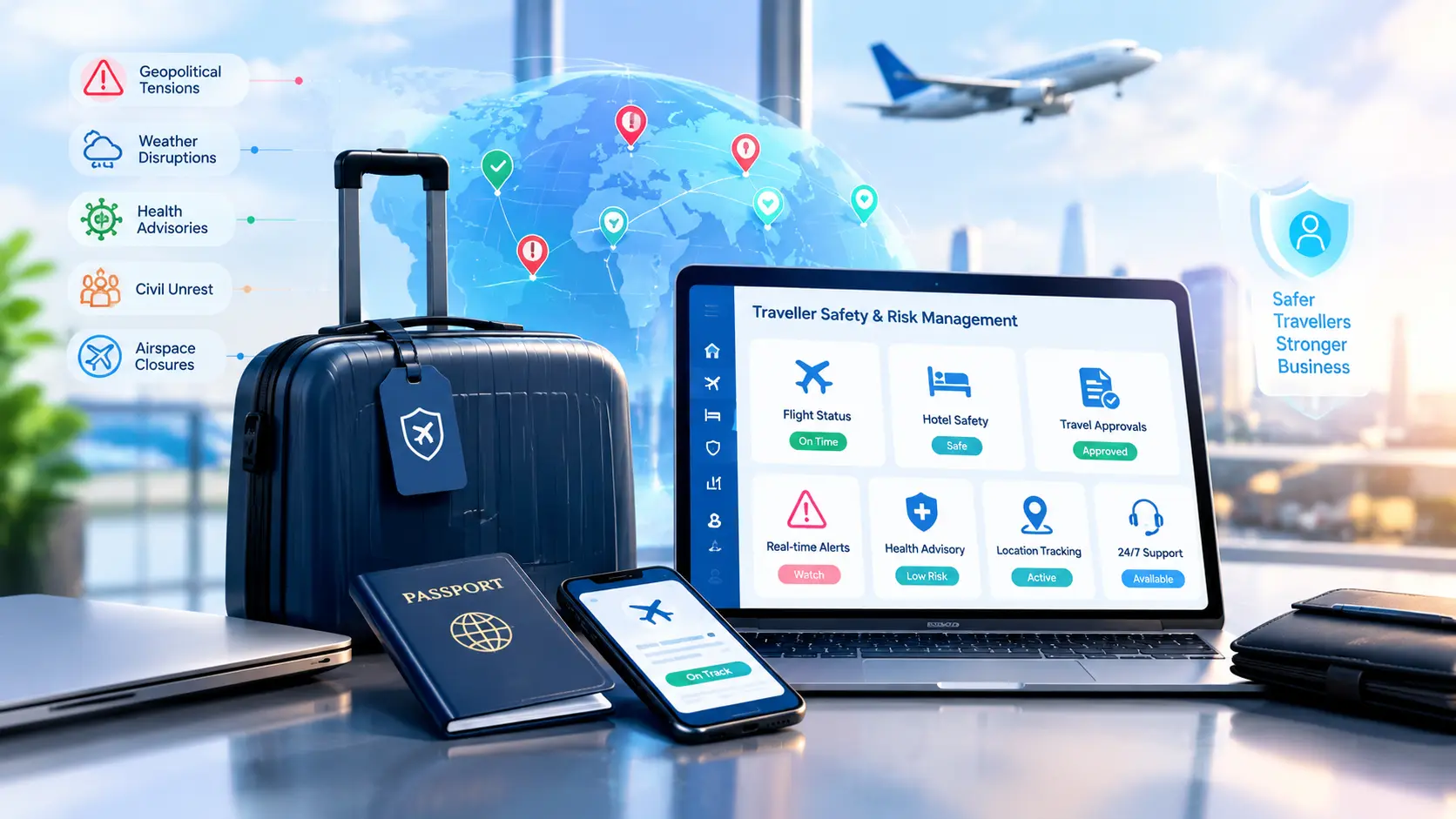
Travel risk intelligence tools can integrate with booking systems to flag disruptions such as:
- Airspace closures
- Severe weather warnings
- Civil unrest
Addressing Common Travel Disruption Scenarios
A strong corporate travel safety policy anticipates likely scenarios.
Flight Disruptions
Policies should clarify:
- Rebooking authority
- Expense approval for alternative routes
- Accommodation coverage during delays
Employees should know exactly what to do if stranded.
Civil Unrest or Political Instability
When protests or regional instability occur:
- Avoid affected zones
- Provide alternate transport options
- Maintain regular check-ins
Escalation protocols must be clear and documented.
Natural Disasters and Weather Events
Flooding, storms, and extreme heat increasingly disrupt travel schedules.
Policy guidance should include:
- Evacuation planning
- Flexible booking approvals
- Remote work alternatives
Traveller Responsibilities: A Shared Safety Model
Traveller safety is a shared responsibility. Policies must define employee obligations clearly.
Employees should:
- Follow approved booking procedures
- Keep contact details updated
- Report itinerary changes
- Monitor official advisories
- Carry required identification and insurance documents
A safety framework works only when both employer and employee participate.
Building a Proactive Travel Risk Culture
Policy documents alone do not create safety. Culture does.
Conduct Regular Training
Organise annual sessions covering:
- Travel risk awareness
- Emergency procedures
- Documentation requirements
Short refresher modules can reinforce key protocols.
Review Policy Annually
Global conditions evolve. A safety policy written three years ago may not reflect current risks.
Update guidelines based on:
- Recent incidents
- Insurance changes
- Regulatory updates
Consult advisories from the Ministry of External Affairs for destination-specific updates affecting Indian travellers.
Technology’s Role in Modern Traveller Safety
Digital travel management systems support safety objectives by offering:
- Automated travel approvals
- Integrated risk alerts
- Centralised document storage
- Real-time itinerary tracking
When safety data connects with booking workflows, organisations reduce blind spots.
A fragmented approach, where bookings, approvals, and risk monitoring operate separately, increases exposure.
Measuring the Effectiveness of Your Travel Safety Policy
Safety policies must be measurable.
Track metrics such as:
- Percentage of trips booked through approved channels
- Incident response time
- Number of unmanaged bookings
- Traveller feedback scores
- Insurance claim frequency
Regular reporting strengthens accountability and continuous improvement.
Balancing Safety with Traveller Experience
Corporate travel policies must protect without creating excessive friction.
Avoid:
- Overly restrictive approval chains
- Delayed response during emergencies
- Ambiguous reimbursement rules
Clear, concise guidelines improve compliance and reduce stress for travellers already navigating uncertain environments.
Frequently Asked Questions
What is corporate duty of care in business travel?
Corporate duty of care refers to an employer’s responsibility to protect employees from foreseeable risks during work-related travel. This includes risk assessment, communication, and emergency support.
How can companies track employees during international travel?
Organisations can use travel management platforms that provide real-time itinerary visibility and automated alerts for disruptions.
What should a travel risk assessment include?
A travel risk assessment should evaluate destination safety, health advisories, political stability, weather risks, and transportation reliability.
Is travel insurance mandatory for corporate travellers?
While not always legally mandatory, comprehensive travel insurance is strongly recommended to cover medical emergencies, cancellations, and evacuation costs.
How often should a corporate travel safety policy be updated?
At minimum, annually. It should also be reviewed after major global events or regulatory changes.
What happens if an employee books travel outside the approved system?
Unmanaged bookings reduce visibility and may limit the organisation’s ability to provide support during emergencies. Policies should clearly define consequences and corrective measures.
Final Thoughts: Safety Is a Continuous Process
Traveller safety in uncertain times is not a one-time initiative. It requires planning, monitoring, communication, and accountability.
A strong corporate travel safety policy must cover:
- Pre-travel risk assessment
- Approved booking channels
- Emergency communication
- Health and insurance provisions
- Real-time monitoring
- Shared responsibilities
When these elements work together, organisations create resilience rather than reacting to crises.
If your current travel policy does not provide full visibility, structured risk management, and integrated support, now is the time to strengthen it.
Contact us to learn how an integrated travel management platform can enhance traveller safety, centralise risk monitoring, and support your corporate duty of care. Book a demo today and ensure your travel programme is prepared for whatever comes next.